Categories
China

Scenes from Shanghai

The Bund, Shanghai, China

Total Miles Traveled: 39,383

Ahh Shanghai – at 20+ million people, it is the largest city in China. That is an appalling number no? Bigger than many countries in the world!  You especially feel it when you fight for a cab when it’s raining. About 30 minutes passed before we successfully out-jockeyed others to get one!

Shanghai, China

Thus far on our trip, we’ve been blessed with very good weather.  That luck changed in Shanghai.  The entire time during our 4 day stay, the weather was unusually cold, very windy and rainy due to a nearby typhoon.  But we didn’t get the weather dampen our travels!  So what do you do?   First, go get some comfort food!   In this case, it was Lisa’s first and therefore unforgettable experience with Din Tai Fung’s famous xiao long baos (soup dumplings, aka XLBs for short). They’re just so good! And much better than the LA/Arcadia branch by the way.  So what did Lisa think? “Holy moly what a flavor explosion!”

Lisa's first Xiao Long Bao experience at Din Tai Fung, Shanghai

Originally started in Taipei, Din Tai Fung has been said to be among the top restaurants in the world.  They may not have Michelin stars (though word has it that the Hong Kong branch has one), but really, who cares right?  It’s all about the food!!  In addition to the original pork XLBs, we had crab roe+pork XLBs, and truffle+pork XLBs – both varieties were worth the extra price and a welcome twist to the originals.

Since we tried the cleaned-up version of XLBs, we wanted to try the local Shanghai XLBs.  We found out about Yang’s Fry Dumplings…

Yangs Fried (Xiao Long Bao) Dumplings

These XLBs had a thicker skin, about the size of a racquetball (big!), and pan fried.  They were quite greasy but delicious nonetheless.  Unfortunately, I had a bout of food poisoning and felt ill for the next couple of days after.  I think it was from the XLBs… 🙁

Yangs Fried (Xiao Long Bao) Dumplings

In brighter news, I decided to open a new restaurant. See?

Shanghai, China

Speaking of food and fun experiences, we liked walking around the Yu Yuan Garden area.  It was a really neat preservation of old Shanghai architecture with souvenir shopping and restaurants… (check out all the umbrellas)

Yu Yuan Garden, Shanghai, China

We stopped in at the Hu Xin Ting teahouse and tried some Pu-erh tea from the Yunnan province.

Shanghai, China

What trip to Shanghai would be complete if we didn’t go to the Bund. It’s a pedestrian area along the river where on one bank (the Puxi (“poo shee”) side) you find buildings reminiscent of historic New York City, and the other bank (Pudong) is a modern concrete jungle where you’ll find many financial institutions.

The Bund, Shanghai, China

And as we were taking photos, I thought this was hilarious – this guy kept fussing around with his hair as his wife prepared to take a photo:

The Bund, Shanghai, China

We also got a chance to meet up with my classmates from Sloan: Rob, David, and Marcus (good to see you guys!). Rob and his girlfriend were kind enough to hook us up with some free passes to the Shanghai World Expo (thanks!).

We were told by many people to go at night because there would be fewer people. Well, I had to admit we were skeptical because it was the last week of the Expo. So, despite the chilly wind, we set out one evening and this is what we found:

“Where are the crowds?” wonders Lisa…

Shanghai World Expo

Look at barricades set up for the line to get in to the Expo. A few days before, we had heard on the news they were expecting close to a million people at the Expo on a given day. HOLY CRAP we were lucky. We got through in less than 2 minutes!

Shanghai World Expo

The Expo is where countries from around the world sponsor “pavilions” that represent their country’s interpretation of a specific theme – in this case, “Better City, Better Life”.  Each country can interpret what that means, from the exterior of the building to the experience inside. There were so many pavilions, one could easily spend a week going to each one. And of course, the most popular ones had the longest lines – For some, the wait was up to 13 hours!?! Saudi Arabia pavilion was one of the most popular – boasting waits of up to 15 hours.   Dude. Why?   I mean, I’ve seen people at Disneyland wait for 2 hours to ride the newest ride, but 15 hours? Really?   So, our strategy was to just walk in to as many pavilions that had short lines, just to see what all this Expo fuss was about.

We had prearranged a “reservation” for the USA Pavilion so that was our first visit. Unfortunately, the pavilion was not impressive.  We heard that it was because the US originally didn’t want to participate and there was some politicking between sponsors. So in the end, it came out to 3 short “feel-good” videos, featuring executives from companies who sponsored the pavilion, and then an area where each sponsor had a little exhibit. Here’s Lisa in front of the representation from her former employer.

U.S.A. Pavilion - Shanghai World Expo

Wait, there was a little bit of cultural stuff:

U.S.A. Pavilion - Shanghai World Expo

Did you know that I almost made it on the South Africa soccer team?  Check me out below – South Africa pavilion and the World Cup!!!

South Africa Pavilion - Shanghai World Expo

Weird display of large faces at the Africa general pavilion:

Africa Pavilion - Shanghai World Expo

We thought Greece did a really good job with their pavilion. They featured TV screens showing candid video footage of life in Greece… like a camera looking through the window of a busy cafe, or one overlooking a seafood market, or another fixed above a Greek wedding reception. Does the movie My Big Fat Greek Wedding ring a bell?

Greece Pavilion - Shanghai World Expo

Finland is minimalist:

Finland Pavilion - Shanghai World Expo

Here’s a funny one. Lisa saw this below and blurted out, “What’s the country of UN?” 😛

Shanghai World Expo

At each pavilion, you would see a line inside. What? Another line, you ask? Yes, it was for people getting stamps for their Expo passport. People were really serious about it – what a brilliant idea!

Shanghai World Expo

Well, that was about it for our very brief stay in Shanghai. Many thanks to our friend Gary and his parents for letting us stay in their apartment. Check out the great view from their living room:

20101025-P1020828

Finally, we have to leave you with this marketing message… Drink REEB. Shanghai BEER!

Drink REEB!  Shanghai beer!

For all of the photos, check out the slideshow:

[flickrslideshow acct_name=”tony-chen” id=”72157625286001463″]

Categories
China

Hongcun Village – a Glimpse in to Country Living

Hongcun Village, Anhui, China

Total Miles Traveled: 39,138

Hongcun Village is a short drive away from Huangshan mountain in the Anhui province.   It’s an UNESCO heritage site, featuring a town that has preserved the look and feel of Ming and Qing dynasty era housing.  It’s also the subject of choice for many local art students.  It’s said that the scenery in this village is very idyllic and reminiscent of old Chinese paintings.

Hongcun Village, Anhui, China

Despite the village having a ticket booth for visitors and people selling thing to tourists, it still feels authentic, with the locals going about their daily lives.

Hongcun Village, Anhui, China

Hongcun Village, Anhui, China

Here’s a tea merchant roasting her tea leaves.  Neat, except we found out later that roasting is more of a way to “revive” the taste of tea that has been stored too long.  Hmm…  kind of a downer.   We bought some tea anyway to try.

Hongcun Village, Anhui, China

These guys look like they do this every day…

Hongcun Village, Anhui, China

And finally, we found this woman beating these dried bushes with a stick.  Can you guess what she’s doing?

Hongcun Village, Anhui, China

These are dried yellow bean bushes.   Beating them releases the bean from their shell on to the floor which she later collects.   Even though she was moving quickly, she said it does take a lot of time to get through the bundles.  Yellow beans are then used in desserts and other foods.  Interestingly, she later invited us to stay with her in her house overnight.  I’d read that it was “illegal” to stay in the village, but that several villagers would offer up a bed in their house – for very cheap – in case someone wants a very authentic experience.  No English spoken though.

Here’s the postcard picture you’ll most often see representing Hongcun village – a semi-circle pond in the center of the village.

Hongcun Village, Anhui, China

We thought it was neat when the lady below sat herself down at the edge of this pond and started washing her vegetables and stripping the fat off a piece of meat.  So while the village feels touristy with all of the tourists walking around, people were really living here.

Hongcun Village, Anhui, China

Later we saw a woman carrying two buckets filled with …. sewage.  Yup, it’s authentic, people really do live here.

Here are some more shots from the village.  Narrow alleyways are the norm.  We thought this reminded us of the town of Toledo outside of Madrid, Spain.

Hongcun Village, Anhui, China

Hongcun Village, Anhui, China

We also visited the largest mansion in the village:

Hongcun Village, Anhui, China

Hongcun Village, Anhui, China

Hongcun Village, Anhui, China

This is a well that still looks like it functions:

Hongcun Village, Anhui, China

A feature of the house that’s not quite captured here is that rooms and hallways are separated by a 1 foot high mini-wall that you have to step over.  We’ve seen it in Tony’s grandfather’s house in Tainan as well.  There’s probably a reason for this, but we forgot to ask.

Hongcun Village, Anhui, China

Hongcun Village, Anhui, China

Finally, on our way to the airport, we stopped at “lao jie” (Old Street) in Huangshan City. It’s a pedestrian street lined with old buildings that have been renovated to become shops selling souvenirs. There were tons of “mao bi” or Chinese paintbrush sets if you’re looking for one… But I think it’s more for the domestic and overseas Chinese tourists.

Lao jie, Huangshan City, China

Hongcun Village, Anhui, China

Here’s the slideshow of all the photos:

[flickrslideshow acct_name=”tony-chen” id=”72157625207744667″]

Next, we’re headed to Shanghai for a few days, to check out the sights and see the world famous Expo.

Categories
China

Huangshan, China – Crouching Photos, Hiding from Tour Groups

Huangshan (Yellow Mountain), China

Total Miles Traveled: 39,098

Huangshan (“Yellow Mountain”) is said by some to be the most beautiful mountain in China and where some scenes of Crouching Tiger, Hidden Dragon were filmed.   It is also likely one of the most visited national parks in China – there was no shortage of tour groups with guides screaming in to their megaphones or tourists clamoring to get the perfect photo.  But we didn’t let that spoil the fun!  The scenery more than makes up for any inconveniences.

Don't climb on cliffs!

Simply dodge the tourists, stay ahead of the tour groups, and you’ll find quiet little spots where you can enjoy the scenery.

Huangshan (Yellow Mountain), China

The great thing about the park is that there are a few hotels at the summit so that you can stay overnight and see the sunset and sunrise.   It’s these two events that many come to see, because you can see a “sea of clouds” against the mountains or as many would say, a real life Chinese painting.

What you soon realize though is that all the food, water, beer, etc. is hand carried up the mountain by porters and not via the gondolas we rode up on.  That’s a 4-hour minimum uphill climb!   It makes you appreciate all of the food and drink you have, and the hefty price you pay to stay up on the mountain doesn’t seem so bad after all.

All food, water, and other sundries are transported up the mountain by foot

Then, you begin to wonder, how did they build all of the hotels?  Well, by hand of course.  We came across these workers, about a dozen of them, carrying a huge steel beam in to a new construction site.

Huangshan (Yellow Mountain), China

They were struggling pretty hard, so much so you wonder if they actually brought all of these up the mountain.   I’d hope they were brought in by helicopter…   So… the next time you think your job sucks?  Well, maybe it doesn’t suck so much.

Huangshan (Yellow Mountain), China

The park is rather large and one can spend several days climbing up, down, and around the mountaintops.

Huangshan (Yellow Mountain), China

We didn’t hike the “West Canyon” route (8 hours)although that was rumored to have some of the most dramatic scenery.  I attempted it for about 15 minutes and realized the steps just kept going down, down, down, which meant a lot of up, up, up.   And not only that, the steps… they were STEEP!

Huangshan (Yellow Mountain), China

See what I mean?  And the guardrails?  Well they weren’t so high in some points.

Huangshan (Yellow Mountain), China

One of the things people do on the mountain is to put a lock on the guardrail at the Cloud Dispersing Pavilion.  Neat to see the old rusted locks against newly purchased ones.

Huangshan (Yellow Mountain), China

After braving the chilly winds waiting for the sunset, we finally saw the light fade:

Sunset

Sunset

Huangshan (Yellow Mountain), China

Then, at 6am the next morning, we woke up to see the sunrise.

Waiting for sunrise

Before sunrise

Before sunrise

You may ask, was it worth it?   Definitely.  The whole experience is a must do.  The scenery really is gorgeous and breathtaking.  If you’re wondering about the sunset vs. the sunrise?  Definitely the sunset.   The sunrise was OK, but we would have rather slept in.  😉

On our way down the mountain, we saw a fun sign:

Huangshan (Yellow Mountain), China

And a peculiar table setting wrapped in plastic:

Yes, we get it - the plates and silverware are sanitized.

At least you know it’s clean!

Next, we head to the nearby village of Hongcun, a UNESCO heritage site.  Stay tuned!  In the meantime, here’s a slideshow of all of our photos from Huangshan.  Be forewarned, there are many!

[flickrslideshow acct_name=”tony-chen” id=”72157625368069776″]

Categories
China

Goodbye, Beijing!

Mutianyu, Great Wall of China, Beijing

It’s hard to believe that we’ve been in Beijing for almost a month!  Perhaps it’s because we’ve been on a regular schedule taking Mandarin classes every other day… and once we were on a routine, time seemed to pass by more quickly.   Well, then again, time has flown by – we’re going on our 8th month of travel, folks!   And it certainly hasn’t been routine!

So, we’ve had a great time in Beijing and are very glad we spent several weeks here.  Most importantly, we got to spend more time with family (Jeff, Aunt Judy, Uncle John, and their canine grandson, Chestnut) than we’ve ever been able to because we’ve always lived in different parts of the world.   We got to meet wonderful people – Jeff’s friends are super fun, caring folks and we can see why Jeff likes Beijing so much!

But alas, we’re moving on in our travels.  We hope to return to Beijing soon!  Here are some additional moments from our time in Beijing:

Traditional Beijing Hotpot, in a coal heated pot:

Traditional Beijing Hotpot

Is it better than other hotpot we’ve had?   Hmmm… not really.  There’s not much space to cook things and sometimes that yummy piece of beef you were looking forward to eating gets lost in the depths of the pot.  Doh!  But it’s just something you need to do when you’re in Beijing.   The “modern” hotpot restaurants have personal hotpots where you can select your soup and sauces, or have larger pots where there are two types of soups.  These are far more convenient and fun.   Trust us, we’ve been eating a lot of hotpot because it’s been a particularly chilly Fall in Beijing.

Another great thing about being in Beijing is that all of the different provinces in China have official administrative “offices” there. In some cases (maybe all?), they have a hotel for their dignitaries and a restaurant serving authentic cuisine from their respective province.  Jeff took us to the official Yunnan (southwest China) restaurant.  Here’s what we ate – fried mint leaves, stewed pork ribs, wood ear fungus in vinegar, and many other things.  The flavors had hints of Thai and other southeast Asian cuisine (YUMMMM!):

Yunnan Cuisine

And this is the only traditional use of a cheese-like ingredient in Chinese cuisine that we’ve experienced – goat cheese curd (sort of like mozzarella) with sliced preserved ham (think prosciutto).

Yunnan Cuisine

As I mentioned earlier, Mandarin classes were a big part of our experience in Beijing.  Here we are with Elly, our teacher.  Not only did she teach us Mandarin, we also learned about life in China through her perspective as a young adult.

Elly, Our Mandarin Teacher

Finally, since we started our stay in Beijing with a family dinner featuring Beijing roast duck, what better way to end our stay than with a Beijing roast duck dinner.  Here’s the waiter carving up the duck and a photo of us with Aunt Judy and Jeff… so good and ridiculously cheap, too!

Beijing Duck

Beijing Duck

So, what next? We’re headed south to Huangshan (Yellow Mountain), where several scenes of the movie Crouching Tiger, Hidden Dragon were filmed. We hear it’s one of the most scenic areas in China… we’ll see!

Categories
China

The Forbidden City Palace in Beijing

Forbidden City, Beijing, China

The Forbidden City in Beijing – deemed a must-see by many, and it is certainly that.  Built in the Ming Dynasty during the early 1400s, it was the imperial palace through the end of the Qing dynasty in the early 1900s.   Visiting it is like a blast to the past as you visualize how dignitaries entered the grounds in order to see the emperor, and how the emperor, empress dowagers, and concubines lived.   The feat of constructing something so grand is amazing in itself.

So, why is the Forbidden City called that?  We wondered the same thing.  Apparently, it’s because commoners were not allowed in it.  And it really is like a city with almost a thousand buildings on the grounds.   Here’s a brief look in to what we saw and learned.

Since fire was a major threat back in the day, they would use these huge metal cauldrons to store enough water that would be used for firefighting.  But that’s not the whole story – these cauldrons are set up on blocks with a small cubby hole in between the blocks.  This was where the burned kindling during the winter to heat the water and prevent it from freezing over, rendering it useless for firefighting.

Forbidden City, Beijing, China

As you can probably tell, the palace is quite ornate, featuring wood carvings and ceramic sculptures all over.  All of these are still the originals that have survived hundreds of years.

Forbidden City, Beijing, China

Forbidden City, Beijing, China

Here is one of the main throne rooms where the emperor would receive guests.  Yeah, I know what you’re thinking – I’d be intimidated too – no doubt even more mind-blowing 600 years ago.

Forbidden City, Beijing, China

There were a few cool artifacts in some of the buildings.   We’re fond of the apothecary furniture for storing medicines.  This one is a rotating one.

An old apothecary cabinet

This is the back of the building where the emperor would go to present to an public audience.  He would walk across the central pathway that leads up to the middle door.  In fact, that middle path runs through the palace and only the emperor could walk on it.

Forbidden City, Beijing, China

Some intricate detail underneath the roof overhang:

Forbidden City, Beijing, China

This is the courtyard where commoners would stand as they waited for the emperor to speak… the original stone work still in place.

Forbidden City, Beijing, China

All in all, the Forbidden City was worth the visit.  We were a bit hesitant because it seemed like one of those checklist things to go to, but if you put a little imagination in to it as you read the history, it’s pretty cool to walk through for a couple of hours.

Forbidden City, Beijing, China

Finally, here’s the scene as we walked out the front gate towards Tiananmen square, with the People’s Liberation Army guard looking over the tourists.

Forbidden City, Beijing, China

Here’s the full set of photos:

[flickrslideshow acct_name=”tony-chen” id=”72157625122504453″]

Categories
China

Hutong Cuisine Cooking Class

Beijing Cooking School

Like we did in other countries, we signed up for a cooking class in Beijing – Hutong Cuisine (hutongcuisine.com) with Chun-Yi Zhou.  She offered her classes in  an authentic hutong (old Beijing-style) home.   We were particularly excited about the class since we have tried our hand at Chinese cooking already, based on what my (Tony) Mom had taught me.

Here’s our prep/dining table.   We used the Chinese chef’s knife, better known to westerners as a meat cleaver.   I like using it for Chinese cooking because it makes smashing, mincing, and scooping really easy.  We even learned a great tip:  hold the knife higher up on the spine so that your index finger and thumb actually hold the blade to stabilize it.  Otherwise, you’re using your wrist, which will tire out very quickly considering how heavy the knife is.

Beijing Cooking School

What else did we learn?  Light soy sauce is for flavoring.  Dark soy sauce is for color.  Also, the teacher used cooking oil from the market that is a blend of peanut oil, safflower oil and something else.

Outside of that, we didn’t learn much.  🙁    We realized that we would be better off to watch my Mom cook since she could teach us far more.   BUT, the whole experience was rather amusing and unusual.  Here’s why…  see our teacher in the photo below?  Looks like a pleasant person, no?

Beijing Cooking School

Well, she’s no angel.  Think soup nazi, but you’re behind the counter WITH him.  She barked orders at us and other students, shouting things like “what did you do that for?  you’re doing it all wrong!”   Her assistant caught most of the tongue-lashing, but you didn’t need to understand Mandarin to know that she was not happy.

She also didn’t know her own recipe!  As she taught us, she would constantly refer back to the recipe, even taking my copy to see what to do next!  … Credibility = zero!   I couldn’t help but smile.  Why hasn’t anyone opened up a competing “school”?   And the kicker was when Lisa and I were cooking, she wasn’t even in the kitchen.  She had rushed into the other room to eat because her rice was getting cold… wow!

Not all was bad though – most of the recipes turned out really good.  Here’s our yu hsiang rou shi, or fish-flavored shredded pork, a common dish found in Chinese restaurants (and our personal favorite of the class).

Beijing Cooking School

So… beware if you’re taking a cooking class in Beijing.  This class is sold through her website separately, as well as through Hias Tours, a popular culinary tour agency.

Up next, we check out the Forbidden City, with fewer Chinese tourists this time around.

Categories
China

Bei Hai Park and the Hutongs

Bei Hai Park, Beijing, China

Bei Hai Park is to Beijingers what Central Park is to New Yorkers – it’s a large park in the center of the city where locals go to relax and find respite from the hustle and bustle of the city.   Located northwest of the Forbidden City, it’s often missed by foreigners who are rushing around the sites.  While it’s not a “must see”, it’s nice to walk through as a follow up to Jingshan Park (just north of Forbidden City) on the way to Shichahai Park where there’s a bar district and the famous hutongs (narrow alleys that offer a glimpse into life in Beijing as it used to be).

The White Dagoba is the landmark at Bei Hai Park (pictured above) and it’s a short climb up to the top where you can get a nice view of the park.

Going up to the White Dagoba, Bei Hai Park, Beijing, China

The view from the top:

Bei Hai Park, Beijing, China

The Park features many ornate temples and buildings.  Here’s the Five Dragons Pavilion.  The locals use the pavilions as a way to showcase their dancing or singing.  Fun to see people gathered around to watch spontaneous performances.  More on this later.

Bei Hai Park, Beijing, China

Bei Hai Park, Beijing, China

Bei Hai Park, Beijing, China

This is the interior of a temple where I snapped a photo.  They said no photography, but I wasn’t technically inside the building.  😉  Pretty impressive.

Bei Hai Park, Beijing, China

Beijingers Unplugged

Since it was still the Golden Week Holiday, there were tons of domestic tourists lurking about.  But this park also had lots of locals.  Below are several older folks practicing their Chinese calligraphy with sponge-tipped water brushes.

Chinese Calligraphy with Water, Bei Hai Park, Beijing

This lady brought her boombox and started playing Chinese ballroom dance music.  She’s a totally stylin’ granny.   Look at them shoes!  SWEET!  She saw I was taking photos so she got up and danced around a bit.  Love it!

Bei Hai Park, Beijing, China

This guy was belting out the tunes.  He wasn’t good, but he was passionate.

Karaokeing in Bei Hai Park, Beijing

And finally, we found this little guy hanging out in the middle of a courtyard, gnawing away on some skinny bamboo.  Gotta take pics of cute puppies no?

Bei Hai Park, Beijing, China

The Hutongs

Beijing Hutongs

Hutongs, are narrow alleyways lined with traditional courtyard residences called siheyuan. They represent what’s left of old Beijing, since much of the city was torn up to build new roads and modern buildings.  Locals still live in these hutongs and while some of it is now commercialized, you still see restaurants appear out of nowhere as you walk along the alleys – it’s where the locals eat.    Here’s a lady firing up the grill with a hair dryer in preparation for grilling chicken skewers that were being prepared out on the street as we walked by.

Beijing Hutongs

We peeked in to a few courtyards – these guys were playing Chinese chess.

Beijing Hutongs

Here’s the more commercial hutong called Yandai Xiejie.  It’s packed to the gills with tourist souvenir shops and restaurants above, but has a cool vibe nonetheless.  I’m not surprised that there’s a bar district near by.

Beijing Hutongs

A note to future travelers, we had trouble finding a good online guide for how to get around Shichahai aside from wandering (which we also did).  This is the best we found: http://www.travelchinaguide.com/package/beijing/shichahai-bike-tours.htm

You can also just give in and pay 100-200RMB for one of the pedicabs to take you around.  But it’s kind of expensive.  Easier to just follow them on foot, but if you’re in a rush, just make sure you negotiate.

Finally, here’s the Drum Tower with accompanying Bell Tower (not pictured) built in the late 1200s.  It was used up until the end of the last Chinese dynasty (the Qing Dynasty) in 1924 to keep time.  We arrived just as it was closing, but it was still neat to see the ornate building rise above the hutongs and picture in our minds what life might have been like.

Drum Tower, Beijing, China

Here’s the full set of photos:

[flickrslideshow acct_name=”tony-chen” id=”72157624990416223″]

We’ll be returning to the hutongs in a couple of weeks to do a cooking class (surprise!) and a “tea safari”.  Look out for that post!

Categories
China

The Great Wall of China and the Great Slide

Mutianyu, Great Wall of China, Beijing

You all know the Great Wall of China.  But, have you ever heard about the Great Slide?  If not, read on.

Jeff, Tony’s photo-bombing cousin (below) and long-time Beijing resident,  invited us to join him and several of his friends to do an overnight stay at the Great Wall of China.

Mutianyu, Great Wall of China, Beijing

As you can imagine, there are several places you can go to visit the Great Wall, but we went to Mutianyu (about 90 minutes drive from Beijing) which featured a “village” of ancient Chinese-styled houses that have been renovated and modernized into vacation rentals.  What a brilliant idea!  It was conceived of by an American architect who married a Chinese woman.

Mutianyu, Great Wall of China, Beijing

Initially, I thought that visiting the Great Wall was a requirement – one of those “checklist” travel things one has to do – but doesn’t really make one’s travels more interesting than they already are.  However, walking on an engineering feat that stretches for thousands of miles and took thousands of years to build  (it was started over 2500 years ago!) is very awe inspiring.

Mutianyu, Great Wall of China, Beijing

Small steps, but steep!

Mutianyu, Great Wall of China, Beijing

We’re all smiles here, but what you don’t see is all the huffing and puffing before and after we took the photo.  Those steps will get your heart pumping!

Mutianyu, Great Wall of China, Beijing

Quite picturesque at dusk.  This was taken looking out from the Great Wall:

Mutianyu, Great Wall of China, Beijing

Some more impossibly steep steps:

Mutianyu, Great Wall of China, Beijing

… you also encounter some moments, like watching the drinks vendors pack up their entire store on a makeshift backpack (heavy!) and walking the ups and downs of the wall to get home.  Or random Chinese people suddenly sitting next to me to take a photo with the ‘bai ren’ without asking…

Because you're white

And if the Great Wall isn’t enough to delight you, Mutianyu features what we call the Great Slide.  It’s a giant toboggan course where you ride a sled and slide from the top of the Wall all the way to the bottom of the hill, good for at least 5 minutes of fun!

Mutianyu, Great Wall of China, Beijing

Here’s a video of what it’s like:

After a few hours of hiking the wall, we went back to our rental villa and ended the day with a wonderful pot luck dinner with our new-found friends.  What did we eat?  Tony’s famous sliders, BBQ corn, chicken wings and pasta.  We ended the evening by playing Texas Hold’em 🙂 East meets West!  I wonder what the ancient Chinese people who once lived there would think if they could have seen us 🙂

Speaking of which, here we are playing online poker on our Apple devices.  Yes, we’re a bunch of Apple fan-girls … and we were not posing in this pic:

Apple Fangirl Advertisement

Here’s a slideshow of the whole set of photos:

[flickrslideshow acct_name=”tony-chen” id=”72157625094763696″]

Categories
China

Beijing, China – Feel the Power of 1.3 Billion People

Forbidden City, Beijing, China

Total Miles Traveled: 38,243

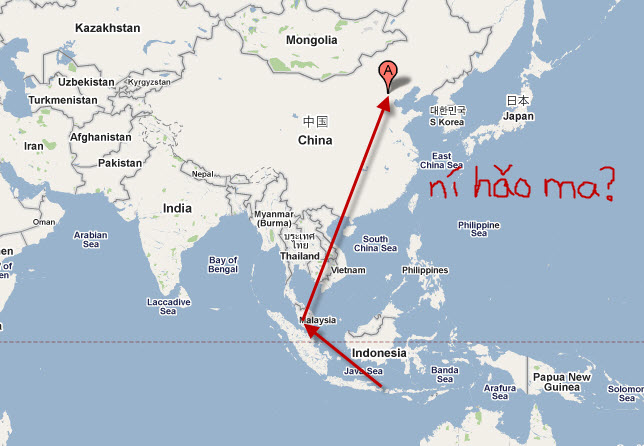
Beijing.  Why after Bali?  Well, my cousin Jenn happened to be going to the states for a few weeks so she graciously offered up her apartment for us to stay in… Beijing, it is!

OK, are you ready?  Brace yourselves, here’s the obvious statement of the year, China is HUGE.  Yes, it’s got a lot of land, but it has a ridiculous amount of people – 1.3 BILLION of them (China’s decimal point is the size of the US!).   What are our first impressions?  Read on to find out!

We happened to be staying in Beijing over the “Golden Week” national holiday, when millions of people travel around China to go on vacation – think Thanksgiving in the U.S.  But, we weren’t going to let that deter us from seeing the sights – because experiencing the crush of thousands of heads with jet black hair was a tourist destination in itself.  We headed straight for Tiananmen Square, site of the 1989 Massacre and the Forbidden City to have a look.   Here’s what we found… Chinese people – as far as the eye could see!  Imagine that!

We too seemed to be part of the tourist attraction.  Zhong guo ren (chinese people) and lao wai (foreigners) alike would stare and gawk at me and Lisa as we walked by, and a few locals took ‘candid’ photos of Lisa.  If we had a nickel for every photo…

Experience the sheer number of people…

Tianamen Square

There were very few “lao wai” because many of them, the expats, had gotten the heck out of Beijing because they knew it would be insanely crowded.  But, there was one “lao wai” among all of the locals.   It reminded us of the Sesame Street song “One of these things is not like the others…  can you guess which one of these things don’t belong here…”

Tianamen Square

Here’s what I call a “surveillance Christmas tree” – a collection of cameras for monitoring the crowds in Tiananmen:

A Surveillance "Christmas Tree"

It’s a madhouse going in to the Forbidden City:

Forbidden City, Beijing, China

Thankfully, there are police, military, and Chairman Mao around to maintain order…

Forbidden City, Beijing, China

Upon entering the gate, it must be good luck to touch the knobs on the door.  The lower knobs were worn down to the steel underneath:

20101003-DSC_1610

For us, the mass of humanity and people watching was more interesting than the Square or the Forbidden City itself.   Thousands of people milled about, sat on the stone floor to rest with umbrellas to protect them from the sun, various tour guides holding flags to keep their group together…cameras – thousands of cameras – slung around necks and snapping photos of the  palace … and long long lines.  It was because of the latter that we decided to skip the Forbidden City this time around, but maybe we’ll return when the crowds are gone.

Meanwhile, here are some photos we took of the outside of the Forbidden City.

Forbidden City, Beijing, China

Gotta be like a local right?  Flash the peace signs!

Forbidden City, Beijing, China

And here are photos of nearby Zhongyuan Park (dedicated to Sun Yat Sen, an important figure in modern Chinese history – the man who ended the Qing dynasty, the last Chinese dynasty, and became known as the founding father of the Republic of China).

Zhongshan Park, Beijing, China

Zhongshan Park, Beijing, China

Now, for a representative photo of strange fashion in Beijing.  We encountered this woman on the way back from Tiananmen.  There’s a lot of, let’s call it “self-expression”, in Beijing.  I should create a website about it.  😉  Seriously, this, and the funny Chinglish signs we see are worth taking pictures of.  We’re going to start doing that.

Interesting fashion

Our First Impressions of China

We were expecting some places to be dirty, smelly, and crowded, but so far we’ve been pleasantly surprised.  Beijing is very clean and orderly.  The malls, restaurants and other venues are crowded, of course, but very nice and modern.  In general, people are polite and especially patient with Lisa trying out her new-found Chinese.  It’s much better than the Beijing I saw 10 years ago when the first subway line was being built.   Some of it must be a result of the Olympics in 2008, but I think China has come a long way in terms of opening up to capitalism/western ways, and it is scary to think how soon it will become even more impressive than it already is.

Also, it’s very clear that the Chinese middle class is growing.  By how much?   We don’t know because many people (so we have heard) are earning their money through the gray economy and so it’s difficult to assess the true wealth of individuals.   We’re told that people buy big purchases like cars (US $50K) and houses (US $500K) in CASH!

When you see/feel the number of people China has and meet them (very smart, extremely hard working people), you start to feel very humble.  People here seem to work VERY VERY hard.  It’s a highly competitive environment and people have “a kill or be killed” mentality. You start to understand why jobs are going abroad and how the world may change in the near future.   Anyway, by the end of our stay in China, we’ll post some more of our observations and see whether our initial impressions have changed.

Here’s the slideshow of all the photos:

[flickrslideshow acct_name=”tony-chen” id=”72157625091112636″]