Categories
U.S.

Luling City Market BBQ, Luling, Texas


Total Miles Traveled: 19,958

So what do you do when you’re in Texas?  You go find a BBQ joint where the ribs taste so good they make you want to slap yo mama.  We decided to combine BBQ with a trip to explore San Antonio, Austin, and the Texas Hill Country west of Austin in a small town called Fredericksburg (more on these areas in future posts).

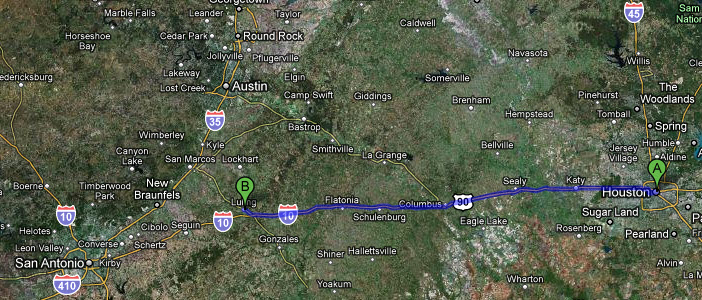
According to my brother and friends, the best BBQ places in central Texas are an hour outside of Austin, so we decided to hit one of the options on our way out to San Antonio – Luling City Market in Luling, Texas.

Luling City Market, Luling, TX

When you walk in to this place, you know it’s the real deal.   It’s simple inside, with basic tables and booths, and dimly lit with fluorescent lighting.  It’s not about the decor here, because you don’t need any – it already has ambiance, between the local clientele and the Texas twang you overhear.

To get your meat, you go to the smoker room in the back where the guys pictured below sell you pork ribs, beef brisket by the pound, and smoked sausage by the link.  You can also get your pickles, pickled jalapeno, pickled banana pepper, and sliced white bread back here.

Luling City Market, Luling, TX

Here’s another view of the smoker room – gotta love that wood and the tub of homemade barbecue sauce!

Luling City Market, Luling, TX

The guys were nice enough to show us the smoker with sausages inside:

Sausages in the Smoker, Luling City Market

When you get your meat at Luling City Market, they serve it to you on thick brown paper (like the kind you lay down when you’re painting inside the house) which is both your plate and tray.  You cinch up the sides and carry it to your table.  Then you go up to the front to get your sides, like potato salad and their tangy barbecue sauce, and then you chow down with your fingers (no utensils allowed, unless you get a side!).

Here we have a “before” picture, with pork ribs, beef brisket, and a sausage:

Before... beef brisket, pork ribs, and potato salad

… annnnnd the “after” picture chomping on a pickle.  Yeah, kinda gross, eh?  Sorry, but had to share.

After...

Overall, we’d recommend the pork ribs wholeheartedly – crispy, tangy, with meat that falls off the bone.  The brisket was a little dry – we still haven’t met a brisket we’ve liked.  And the sausage was good, but after having Argentinean chorizo, we still prefer the latter!

Next, we head over to San Antonio to check out the River Walk!
Categories
U.S.

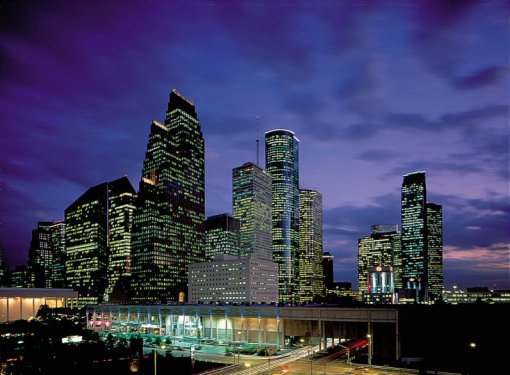
Hello, H-Town and Happy Anniversary!

(photo credit: clouddragon)

Total Miles Traveled: 19,818

So, we’re back in Houston to see the World Cup… doh!  We should have stayed in Argentina for that!  Although it was bad planning, alas, changing our flights would have been cost prohibitive.

But Houston ain’t bad – it’s home sweet home for Tony.  And crawfish are in season – Lisa’s had a craving, so we hit up Ragin Cajun for some boiled crawfish, jambalaya and fries:

Ragin Cajun in Houston, TX

Ragin Cajun in Houston, TX

Just have to point this out, but I wish I could find “Slap Ya Mama” spice mix pictured below – it was goooood…

Ragin Cajun in Houston, TX

After raving about Ragin Cajun to Tony’s Dad, he set up another crawfish feast at his friend’s place called “Catch of the Day”, a drive-thru bank repurposed in to crawfish/seafood joint with a bar.

A drive-thru bank converted to a restaurant called "Catch of the Day"

Their specialty is a spicy garlic sauce and wooo-eeeee!  It will light you up, especially the corn.

Spicy garlic cajun crawfish ... HOT!

Another highlight on our Houston visit is Tony’s dog Max, an 11 year-old dachshund who is quite the character.  Here, Lisa scratches his itch and he can barely stand up!

And Max is also proud of his ability to hold a tune.  Note how he sings from side to side for all to hear.  😉

Finally, Houston is where we celebrated our one year wedding anniversary!

1 Year Wedding Anniversary at Mark's, Houston, TX

We can’t believe it’s been a year since we’ve been married! We celebrated at Mark’s, a restaurant housed in an old church and also one of Houston’s best.

Up next, we visit Luling City Market for some of the best BBQ in Texas, visit San Antonio and Austin, and then Fredericksburg in the Texas Hill Country.  Stay tuned!

Categories
Argentina

Cajun Shrimp Boil in a Parking Lot

Cajun Shrimp Boil in the Parking Lot

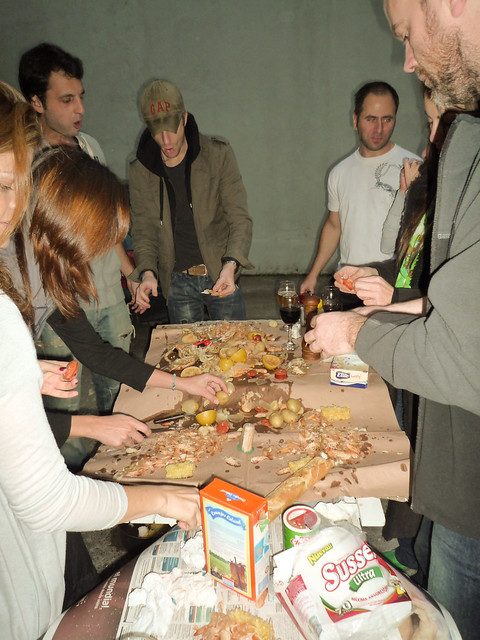
No, this isn’t Argentine tailgating for a soccer game or what Portenos do on a given Sunday – it’s what do you do when you miss spicy food from Louisiana – and where do you do it?  The parking lot of course, over an open wood/charcoal fire.  Duh.

Joey wanted to show his Argentine and French neighbors a little slice of home and test their tolerance of hot spices.   So he had one of his fishing clients bring down boxes of cajun crab boil spices.

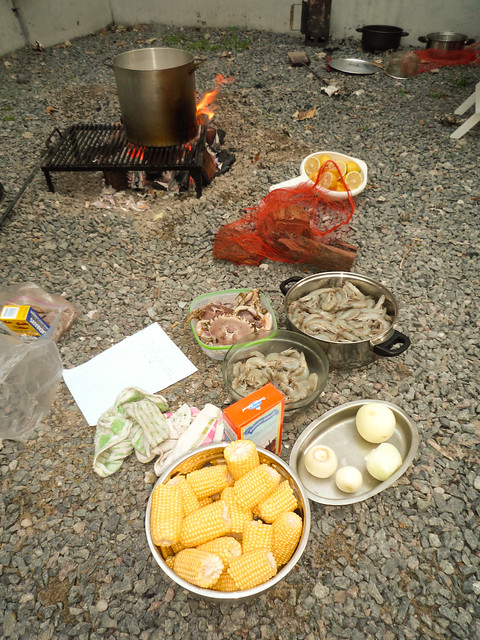
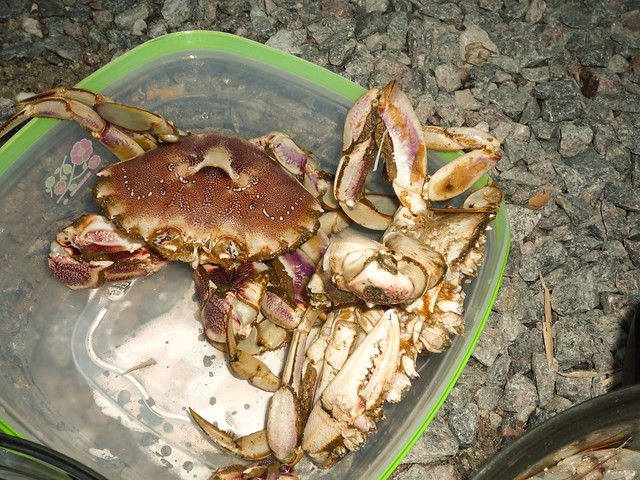
Here are the ingredients – shrimp, crab, smoked sausage, corn, potatoes, onions, lots of lemons, crab boil mix, and a giant pot of water.

Ingredients

Crab

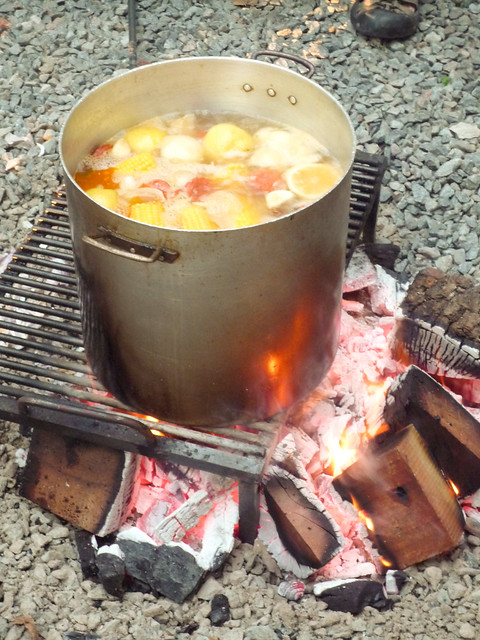
After throwing all the ingredients in with the shrimp going in last, the food is ready to go:

And what did the neighbors think?  They thought it was good and not too spicy.  For our tastes, not spicy at all.  If we were to have done it right, there would be a lot more cayenne and spices in there – you should be sweating!

Cajun Shrimp Boil in the Parking Lot

Finally, the funny thing was, after we had eaten two pots of the shrimp boil, the neighbors went upstairs to get more meat because they were STILL hungry.   Argentines can eat!  Surf and turf!

Here’s the full set of photos:

http://www.flickr.com/photos/tony-chen/sets/72157624408371288/show/

Categories
Uruguay

Colonia, Uruguay – Quaint, Artsy, and Un Poquito Caro

Colonia, Uruguay

Colonia, Uruguay is a small colonial town only an hour (on a fast boat ferry ride) from Buenos Aires.  And because of its proximity to BA, it’s also an expensive (more on this later) tourist destination for Argentine weekenders, foreign tourists like us, and expats doing a “visa run” so they can legally return to Argentina for 3 months.

The ferry ride is actually quite nice and easy to set up.  You can go online and buy tickets through Buquebus and then pick up your tickets at the clean modern ferry building.   As a note to future travelers, there are 3 classes of service on the ferry.   We recommend booking the second class or above so that you aren’t fighting for seats.  The seats are little larger and the area is a bit more private (and much quieter) in the 2nd and 1st class areas.  Here’s a look back at Buenos Aires on our way to Colonia:

View of Puerto Madero, Buenos Aires from the ferry

As you’ll see in the photos below, the old part of Colonia (west of the port) is very quaint and sleepy with cobblestone streets and art galleries tucked in to aged adobe homes.

Colonia, Uruguay

Colonia, Uruguay

Colonia, Uruguay

Colonia, Uruguay


An old film projector

Colonia, Uruguay

This photo was taken on the Calle de los Suspiros, one of the tourist attractions.  There’s a really neat art gallery at the end of the street here.

Calle de los suspiros, Colonia, Uruguay

… And below, Lisa checks out the inside of an old car that has been turned in to a dining table at a restaurant called “El Drugstore”.

The funky cars outside of "El Drugstore" restaurant

Speaking of restaurants and shops, old town Colonia is EXTREMELY expensive.  We understand that it’s a tourist destination, but the prices are astronomical.  Entrees run $20+ USD (!) per dish at the bottom end – we even found a place serving $35 USD steaks.  That’s over 3x as expensive as most places in Buenos Aires, at least for the quality we thought we were getting.  Just be prepared to shell out, or walk back in to the “real” town where the restaurants get cheaper.

For lunch, we had to try a “chivito” – steak sandwich with ham, cheese, and fried egg – basically an Uruguayan cholesterol bomb.   It’s the thing to try when in Uruguay, so here’s an open-faced one we got for about $10 USD.  If you want the more authentic experience, there are several food trucks and tents on side streets where the locals go.  In hindsight, we probably should have gone to those just to see what that was like, but we didn’t want to eat out in the cold on that day.

Open-faced Chivito (Uruguayan Cholesterol Bomb)

For more photos of Colonia, see the slideshow here:

http://www.flickr.com/photos/tony-chen/sets/72157624261156740/show/

Categories
Argentina

Empanadas Cooking Class with Teresita

Empanadas Class with Teresita, Adrogue, Argentina

One of our goals while travelling is learning how to make the cuisine of the countries we visit.  So when we finally settled down in Buenos Aires, we started researching cooking classes.  We would have loved to learn how to make an ‘asado’ – Argentina’s version of BBQ.  But we learned that many of the most savory cuts of meat are not available in the US.   Instead, we found the perfect class — a hands-on course to learn how to make empanadas.

Empanadas are Argentina’s version of  the dumpling.  They are the ‘all-Argentinian’ snack food and can found throughout the country – from convenience stores to high end restaurants.  Each region may tweak the recipe slightly but the main idea is the same.  Make dough and stuff it with yummy meaty goodness and either bake or fry.

The class was offered by a woman who owns a B&B in Adrogue – a nondescript middle class suburb about 60 minutes outside of Buenos Aires.   There were 2 other people in the class – a couple from San Diego!

Although they seem like they would be difficult to make, it’s actually quite easy.  It goes a little like this…

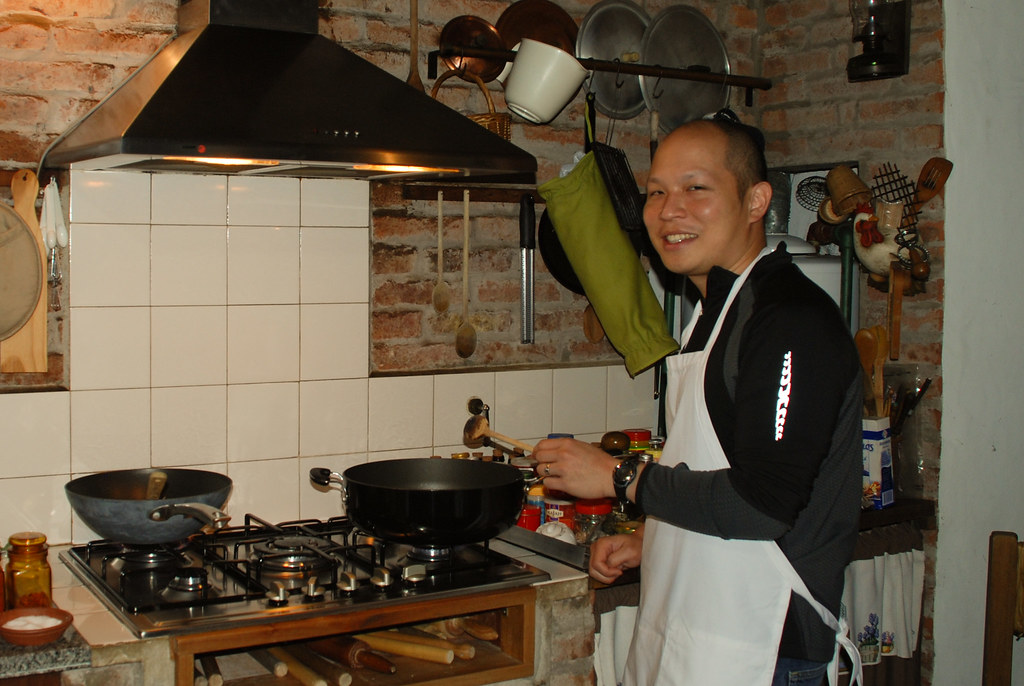
First, you make the filling.  We made two types, humita (ground corn) and ground beef.   The beef version has onions, sliced eggs, sliced green olives, hot and sweet paprika, crushed red peppers, cumin, and raisins – sauteed in butter and canola oil.

Empanadas Class with Teresita, Adrogue, Argentina

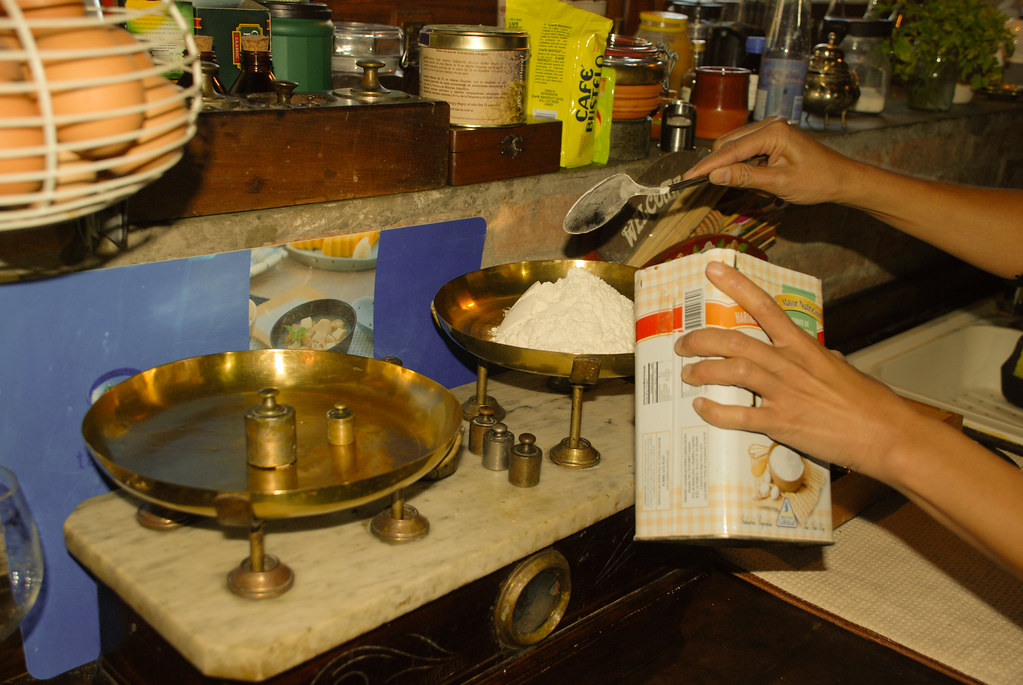
Then, you make the dough… by measuring it out an awesome antique kitchen scale.  If you don’t have one that’s awesome and antique, that’s OK.

Empanadas Class with Teresita, Adrogue, Argentina

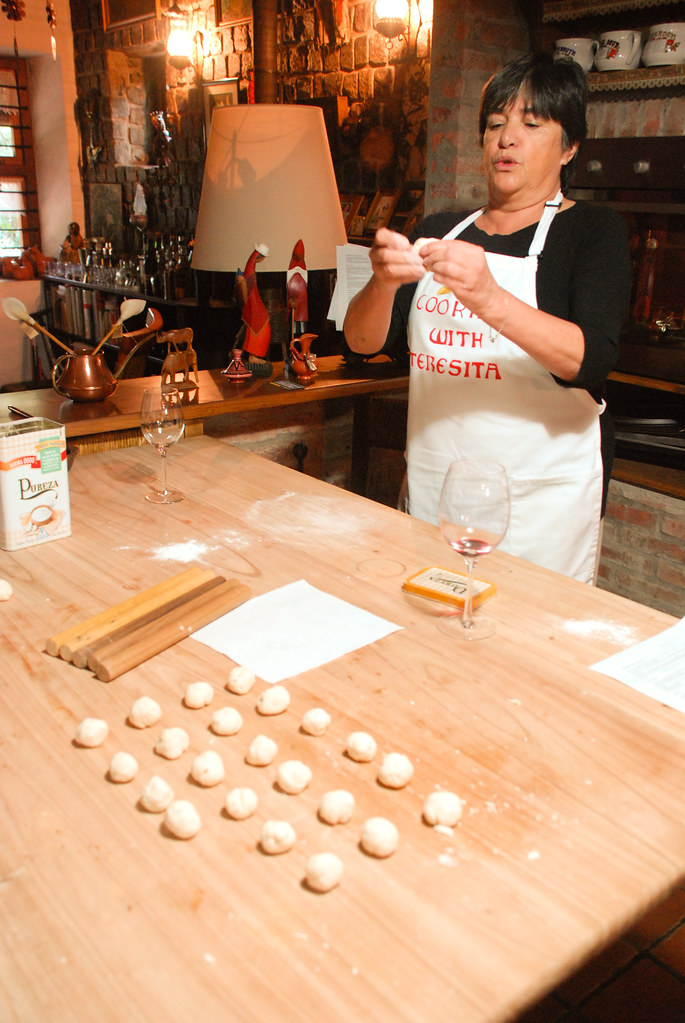
Here, Teresita shows us how to roll them up in to balls, mash them in to discs, and then roll them out in to skins.

Empanadas Class with Teresita, Adrogue, Argentina

And once you have the skins, you put the filling in, and close them up like dumplings, using a fork to mash the edges shut or rolling the edges over like Lisa shows in the video below.

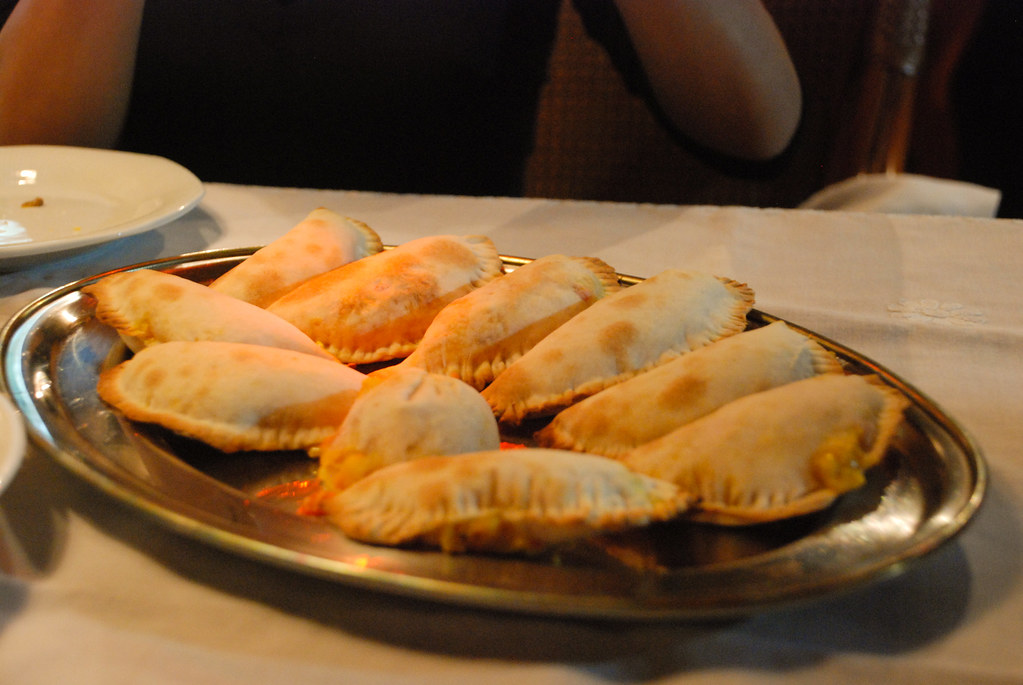
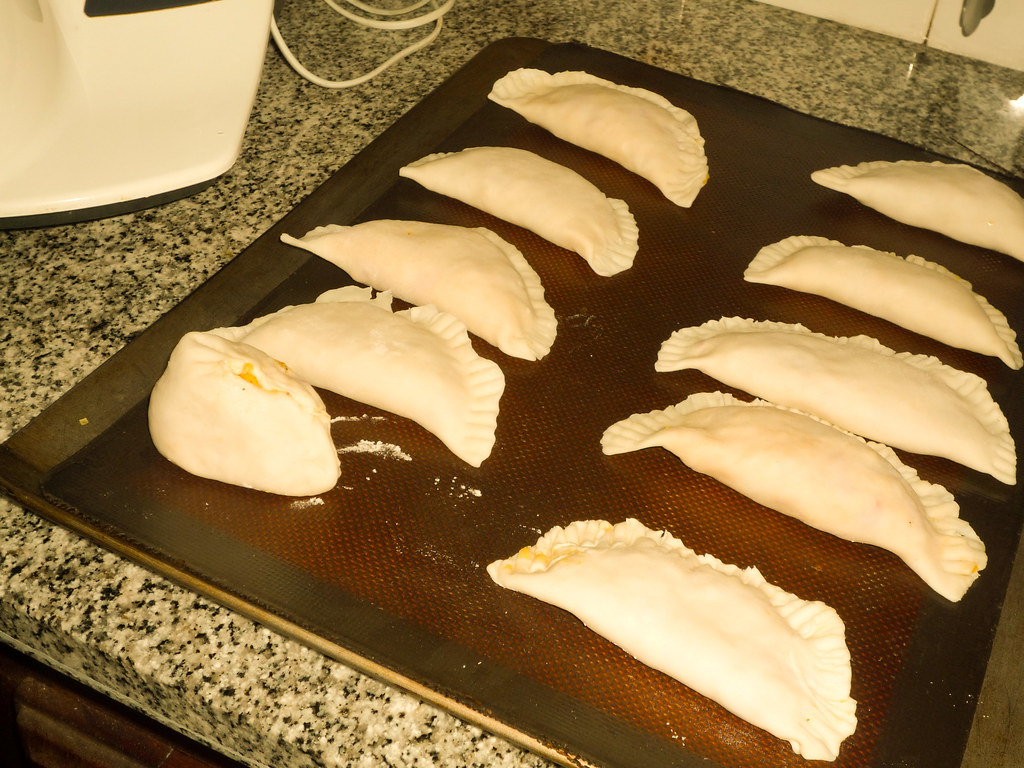
When you’re done, they should look like this, ignoring the mutant empanada below of course (note that the mutant was one of Lisa’s early attempts)…

Empanadas Class with Teresita, Adrogue, Argentina

Finally, you brush the empanadas with water and throw them in the oven for 12-15 minutes at 425 F.

All done!  Let us know if you want the exact recipe.

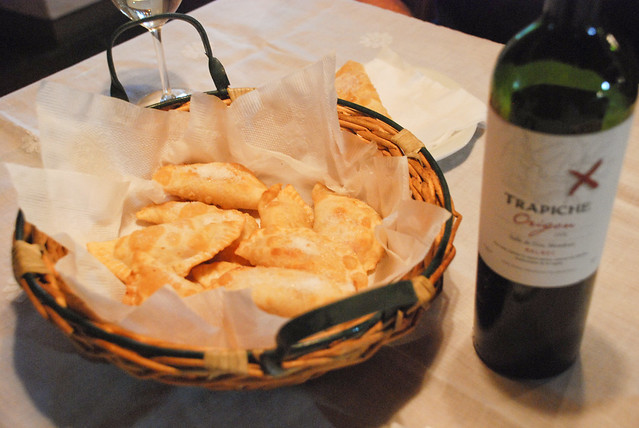
Most will enjoy their empanada with an Argentine wine – either a Malbec or a white wine called Torrontes.  We prefer the Malbec!

Empanadas Class with Teresita, Adrogue, Argentina

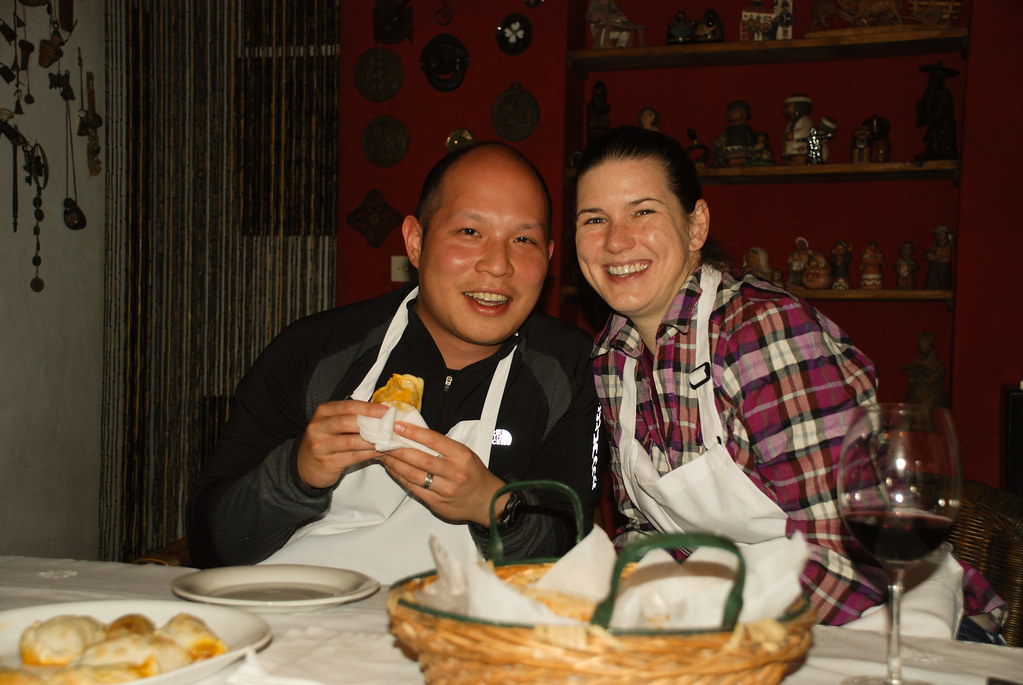
The best part was eating the fruits of our labor.

Empanadas Class with Teresita, Adrogue, Argentina

Categories
Argentina

Argentine Asados and a Paint Party

Asado at Joey's

Our friend Joey is a Texan turned Argentine.  He came to Argentina over 12 years ago to make a living as a fly fishing guide in Patagonia and now runs his own tour company.   We know Joey because his mom and Tony’s mom were friends in high school in Taiwan and have been in touch for over 50 years.

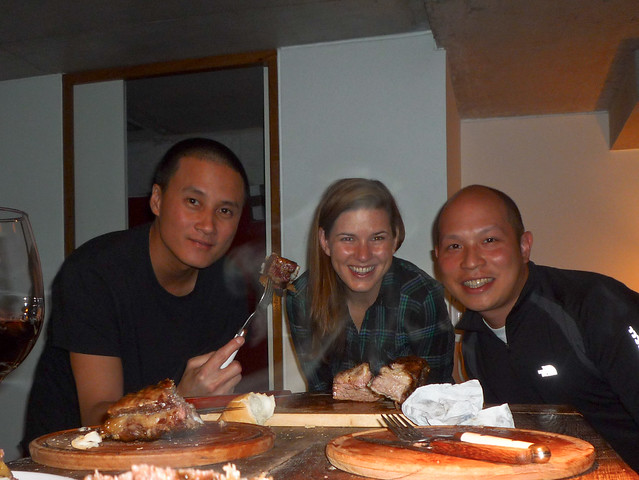
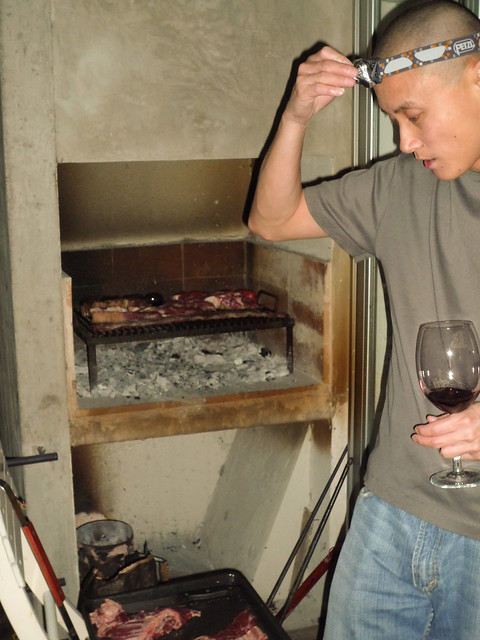
Joey loves making asados (doing barbeques) and we were lucky enough to have him cook for us twice.  There’s something to be said for grass-fed Argentine beef, slow-cooked over coals, with just salt and pepper – simply delicious.

Here’s his custom-welded parilla (grill) on his balcony where he regularly cooks for neighbors and friends.

Asado at Joey's

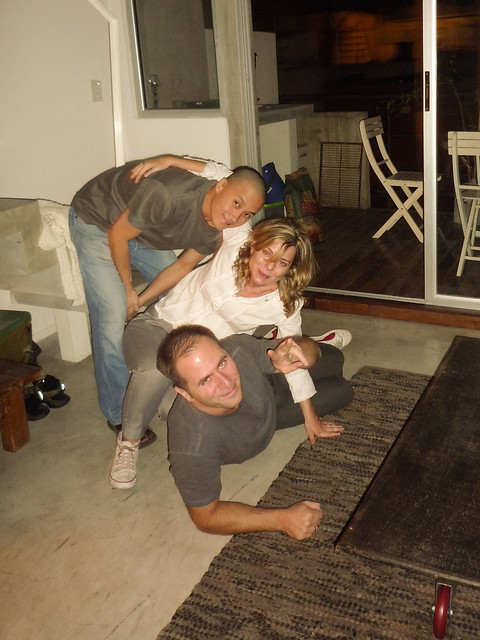
One night, we met the neighbors, Andres and Silvina.  We started off with some wine, then had some beef ribs and hangar steak, and more wine.  And of course, someone had to end up on the floor.  Nah, just kidding – their cat was hiding under the table.

Asado at Joey's

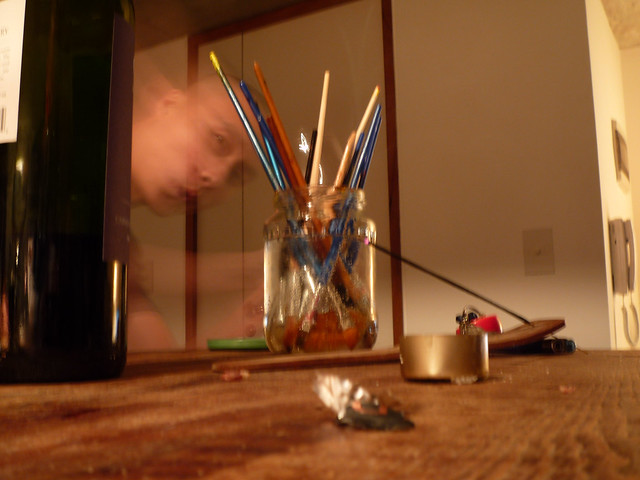
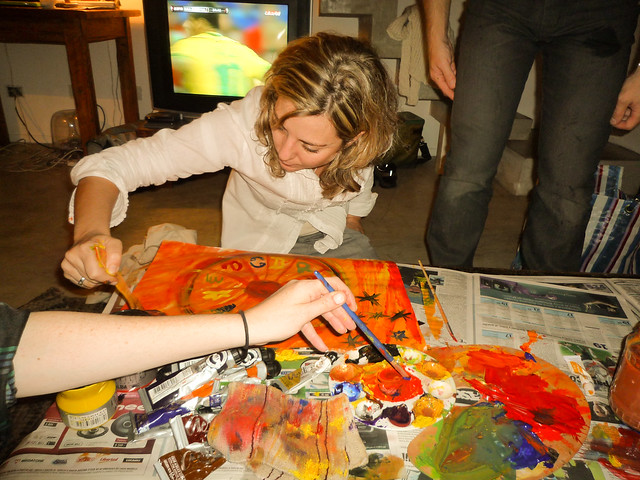
Silvina’s a bit of an artist, so in a spurt of spontaneity, she brought over her paints and brushes!

Asado at Joey's

You can try this too – go out and buy some water-based paints, brushes, and a couple bottles of wine, and you’ll produce some of the best art ever – at least in your own eyes. 😉

Asado at Joey's

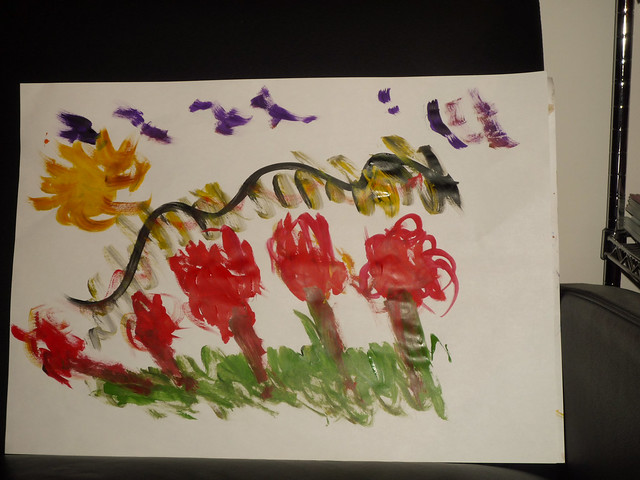
Seriously though, it’s a lot of fun.  Here’s Lisa’s painting of tulips –

Asado at Joey's

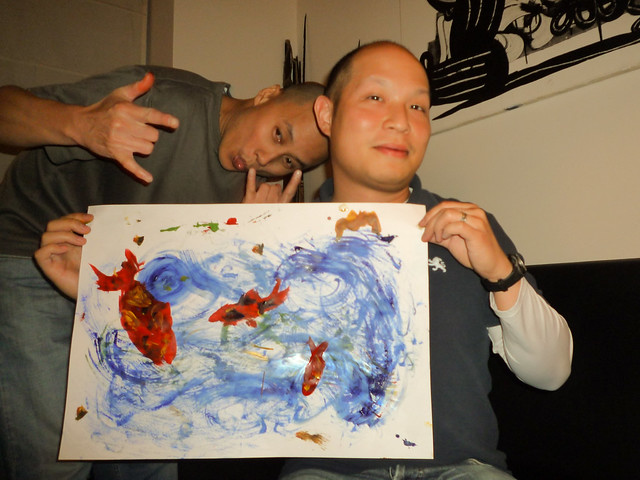
Here’s Tony’s depiction of a koi pond – look at that PRIDE!

Pride

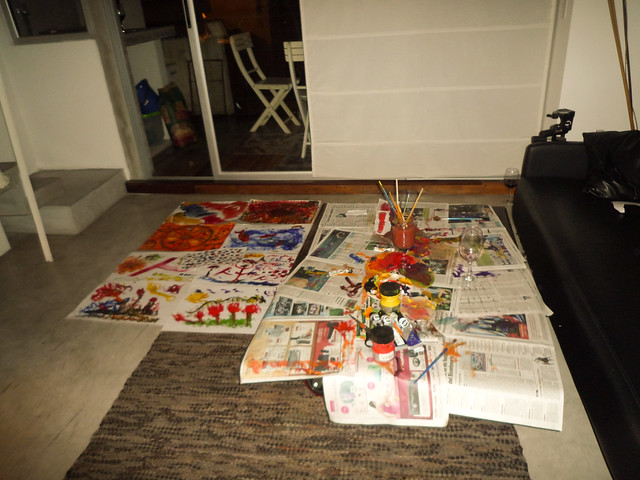
The best part is, you can paint as many as you want and they just get better with wine!  😉

Asado at Joey's

Categories
Argentina

Barrio Chino (Chinatown), Buenos Aires

(photo credit: some random person)

I’m guessing Chinatown is not a major tourist attraction in Buenos Aires for most foreigners. It’s only a few square blocks in the Belgrano neighborhood, which is kind of out of the way.   Yet, there are a lot of stores with random, kitschy knick-knacks like the one here, which is actually of Japanese origin(!) :

Joey took us there by public bus, which was an experience in itself – long wait for the bus and packed like sardines – not unlike buses or subways in NYC – except it wasn’t during rush hour!

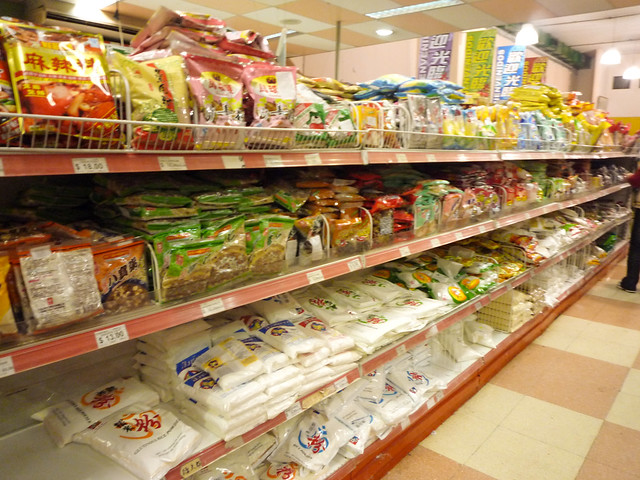
We went there to scope out the fresh seafood – shrimp and crab – for a cajun crab boil that Joey was going to attempt for his neighbors.   What we found might be more interesting to me (Tony), having grown up going to Asian supermarkets in the US.   All of the products were the same you find in the US, even the produce (where did they get it??) , only instead of hearing broken English, you might hear broken Spanish.  I think I was better off speaking Chinese.

Here’s a view of the supermarket – looks no different, except the price labels are in Spanish / pesos.

20100528-P1010696

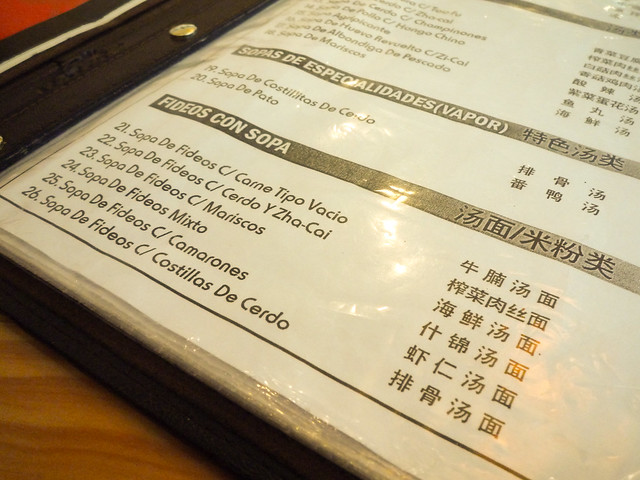
The other purpose of our trip was to eat some Chinese food, which we hadn’t had for 3 months (!).  It was kind of fun to order, because even though I speak Chinese and Spanish, my Chinese vocab sucks and I can’t read Chinese.  So, I see the menu pictured below and it doesn’t mean anything to me.

Beef Noodle Soup in English and Spanish

So I ended up ordering things I knew how to say in Chinese – beef noodle soup, dumplings, etc. 🙂   The other thing they had here was homemade chili oil!  For those who don’t know, Argentines don’t like spicy food, so this was the first time (since Chile) that we had anything spicy.  Sooo good!!

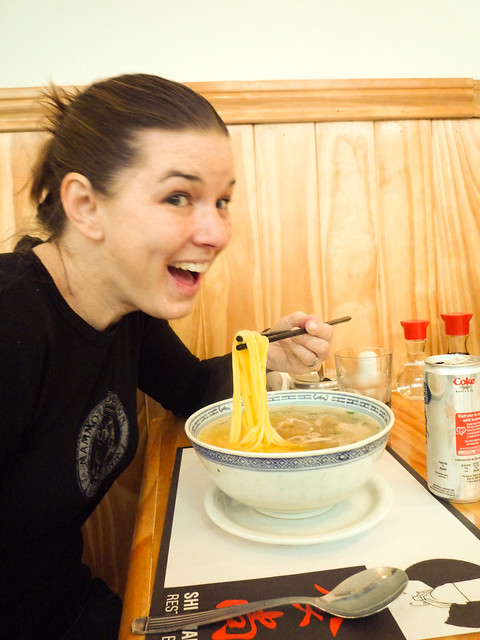
Here’s Lisa with her shredded pork noodle soup – yum:

Lisa's shredded pork noodle soup

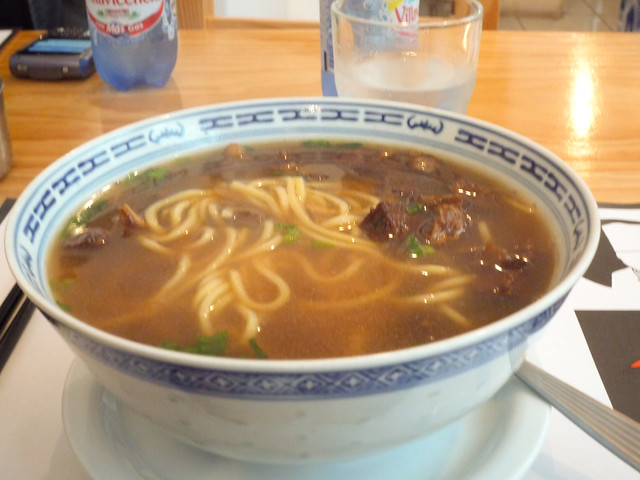
Here’s my beef noodle soup…

Beef noodle soup, Chinatown, Buenos Aires

So how was it, you ask?  Well, if we were still living in California, it would be subpar.  But, because we hadn’t had those flavors in months, it was frakkin’ awesome.

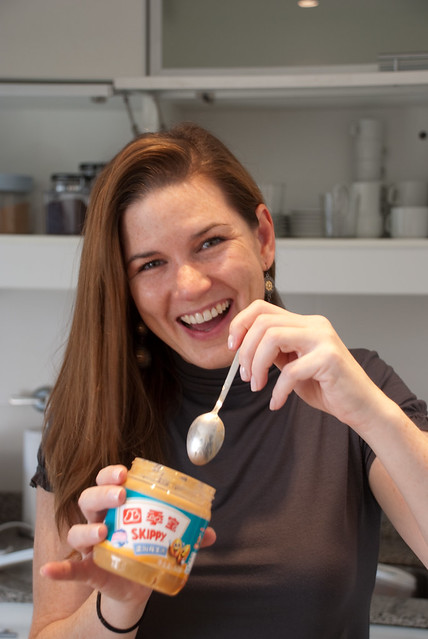
What else did we find in Chinatown?  PEANUT BUTTER.  We couldn’t find it anywhere in Argentina.  Argentines like their “dulce de leche” (like caramel) instead.  Here’s Lisa digging in – we finished the whole thing in about a week. (Note the Chinese characters on the peanut butter jar)

20100606-DSC_1068

Next up, an asado and painting at Joey’s place

Categories
Argentina

Back to Buenos Aires

(photo credit: SIP-IAPA)

Total Miles Traveled: 14,773

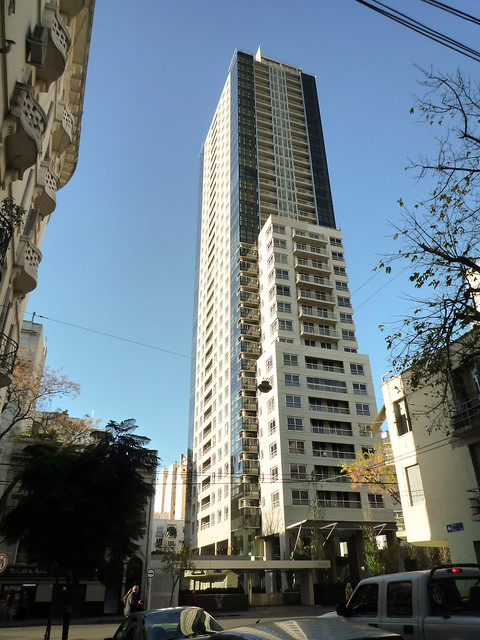
Since we’d been on the road for over two months (and stayed in 23 different places), we needed to camp out somewhere to decompress.   We decided to head to Buenos Aires and find an apartment so that we could experience the city as a resident and use BA as a base to travel elsewhere. After a couple of days of searching, we found a great deal on a 1 BR apartment in a centrally located high-rise on the border of Palermo and Recoleta (at the corner of Guemes and Coronel Diaz).

Our Apartment Building in Palermo

We had about 4 weeks in Buenos Aires – so what did we do?   We became “portenos” (a Buenos Aires citizen)! We did everyday things like going to the supermarket and cooking, making trips to the pharmacy, working out, meeting new people, going to an asado (backyard barbeque) and riding public transportation.   It’s the same kind of feeling you get when you move to a new city – everything is awesome and stimulating – before you (maybe) get jaded by big city life.

Here are some tidbits we’ll remember from our time there:

  • Stopping the bulge – Almost every day, we worked out in the building’s gym and started the 100 pushup and 200 squat challenges (which both have convenient iPhone apps by the way).  Why, you ask?  Well, we had packed on more than a few pounds from eating a bit too well (mmm… steak. mmm raviolis. mmm pizza) and “tasting” all the local wines.  The pants were starting to feel a wee bit tight (or gasp! not fitting at all).  We now understand the appeal of “lose weight fast” advertisements, but know that they are too good to be true.
  • Riding buses and subways – The subway system is easy to navigate, but somewhat inconvenient to getting to some places like the restaurants in Palermo Soho.  So, you can take taxi (which can get expensive over time, but oh so convenient), or take a bus.  But the bus system is MMUUUYY convoluted and you really have to invest in learning it by buying the guide at your local kiosco, learning the bus numbers, and seeing where they go.  And you need exact change – by change we mean coins.
  • Moneda, por favor –  Portenos say that coins “moneda” are more valuable than bills.  We would do a little fist pump any time we got a peso or 0.25 centavo coin as change to use for the laundry machines.  Small victories!
  • The canine opera – Every time an ambulance came through the neighborhood, the local dogs (and there are LOTS of dogs) would start howling in concert because of the sirens.
  • Doggy doo-doo minefields – Speaking of dogs, you really had to watch where you stepped when walking around Buenos Aires because lots of owners don’t pick up after their pets.  This was an especially interesting task since it was Autumn and trees were shedding their leaves.  Beware the steaming leaf!
  • Argentines smoke a lot – Recently, Argentina has started banning smoking indoors at cafes and restaurants (though larger restaurants will have designated smoking rooms).  So as a result, many Argentines sit outside.  It really doesn’t matter if it’s cold or rainy or windy, you will always see tons of people sitting outside. These folks are truly committed to their smoking habit!

So what else did we do, when we weren’t avoiding smoke and steaming leaves?  Two things – shop and eat!

Shopping

  • You can find high quality and stylish handbags for a quarter of the price of LV or Marc Jacobs.  You just have to get over being a brand whore.   For example, check out Charles Calfun: http://www.charlescalfun.com/english/home-eng.htm
  • Shoes/boots – there are tons of stores!  A girl could definitely feed the addiction in Buenos Aires.  Guys, just fork over the credit card.  Resistance is futile.
  • Palermo reminds us of New York’s SoHo district – lots of boutique designers and cool stuff.  But also way overpriced for the quality you’re getting.  Same prices as in NYC.

Dining Out!!! Our number one favorite activity was dining out… below are some photos from our dining adventures.

Ginger Restaurant, Palermo Nuevo, Buenos Aires

  • Argentina has way too many restaurants to mention, but we mostly ate in Palermo SoHo.  La Cabrera and Cabernet deserve a shoutout.
  • Wanna learn the Spanish words on a menu?  Just watch cooking shows on Argentine TV.  They speak more slowly and will repeat the words often.  Another option is asking for both an English and Spanish (or ‘castellano’) menu to compare and contrast.
  • Argentine tap water is OK – perhaps a bit chlorinated – but totally fine to drink.  Tony and I drank it everyday!  But Argentines are muy picky about their water and so tap water is never an option at restaurants; it’s bottled water only!  All will offer great flat water (from Patagonia) or ‘agua con gas’ also from Argentina.  We loved the agua con gas.  For whatever reason,  we found the Argentine agua con gas MUCH better than similar waters from other countries.
  • One interesting thing we learned is that Argentine wine / alcohol consumption is on the decline (seriously!).   In fact, many Argentines don’t drink wine all that often —  they prefer soft drinks instead.  And if they do drink alcohol, the drink of choice seems to be Coke and Fernet.  Fernet (if you haven’t heard of it) is a really nasty tasting ‘herbal’ liquor (think Jägermeister)

  • Entrana with herbed butter, Crizia, Palermo Viejo

  • Meeeeeeaaaaaattttt (warning for Vegetarians):  Argentines eat pretty much every part of the cow and pig.   They have cuts of beef and pork that don’t exist in the US.  Our favorite cuts are the following:
    • Lomo de pimienta (tenderloin) at La Cabrera – probably one of the best tenderloin steaks we’ve ever had with a black pepper crust.  We actually went back to this place twice.
    • The mollejas (sweetbreads – or thyroid glands) are also the best – seriously they are amazing!
    • Asado (beef ribs) slow cooked over low heat, but not like Texas beef ribs which are smoked
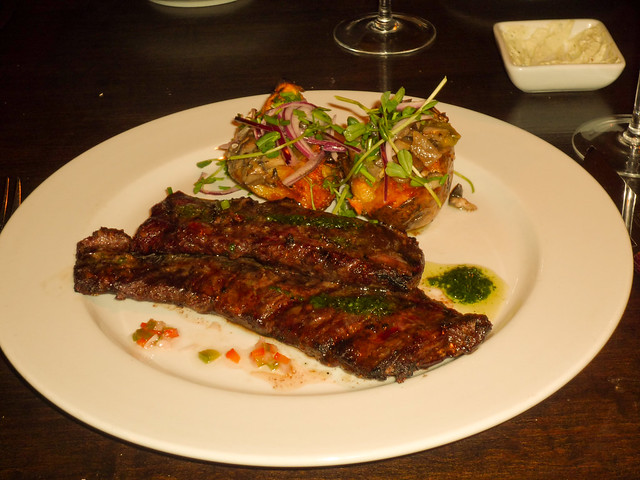
    • Entrana (beef hangar steak – pictured above, with herbed butter) – it’s a tougher cut, but beautifully done by Argentine parillas.
    • Matambre (rib meat that doesn’t exist in the US)  There is both pork and meat matambre.  We especially loved the pork variety with fresh lemon juice.  Lip smackin’ good.
    • Chorizo – the sausages in Argentina beats the BBQ sausages you find in the southern U.S.  No joke.
    • Cordero  (lamb) – slow cooked over the open fire – still the best is found in Patagonia, especially Southern Patagonia.
    • A not so favorite grilled entree:  chinchulines (intestines stuffed with a liver pate) – it feels like you are eating intestines with partially digested food still inside.  Gross…

Our next few posts will show a few of our outings in more detail, in the meantime, enjoy some dining out photos:

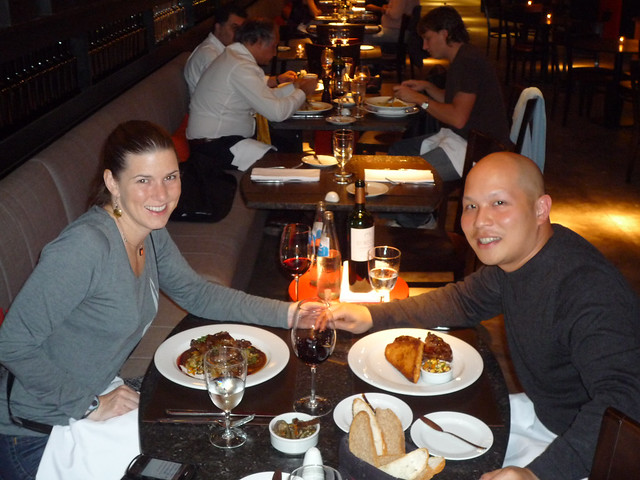
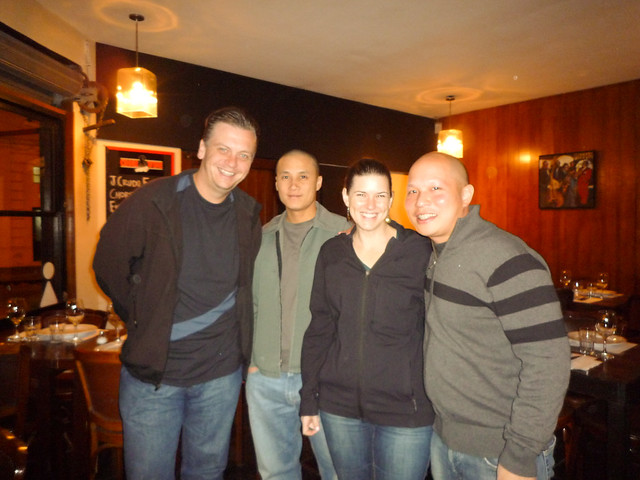
… Dinner with Mike, who Tony knows from Yahoo, and Joey, who is Tony’s family friend…

Dinner with Mike Manning and Joey Lin

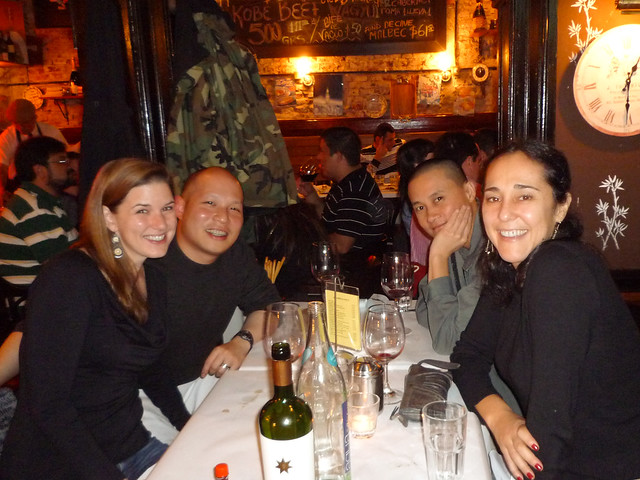
… Dinner at La Cabrera Norte with Joey and Heather on our last night in Argentina…

Dinner at La Cabrera, Palermo

And for all you foodies…

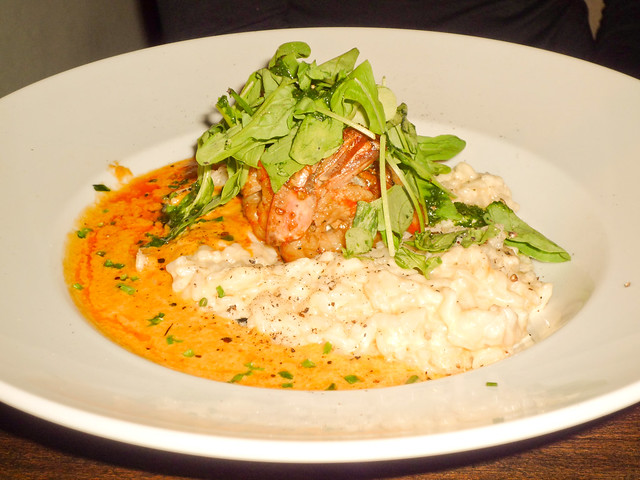
Risotto with Langostines and Mescarpone at Crizia …
Risotto with Langostines and Mescarpone, Crizia, Palermo Viejo

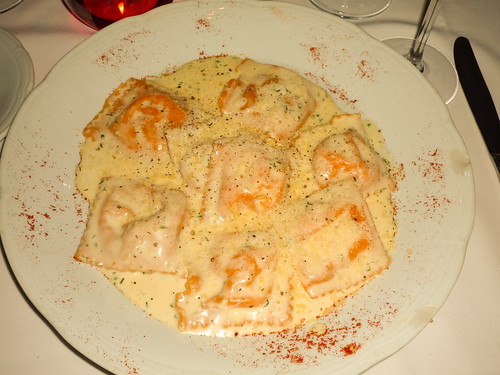
… Langostine Raviolis at Cabernet …
Langostine Raviolis at Cabernet, in Palermo

… Bife de Chorizo at Ginger Restaurant …
Bife de Chorizo at Ginger in Palermo Nuevo

And we’d be remiss if we didn’t mention tango.  We went to see a tango band called Cuarteto de Julio Coviello (thanks to Heather who invited us to see this band!!).  It’s a young band and they take a more modern approach to tango music.  Julio Coviello is the bandoneon (accordion) player you see on the far right in the video below.

For more photos, check out the slideshow:

Categories
Argentina

Iguazu Falls: Up Close on the Argentina Side

Total Miles Traveled: 14,103

While we were in Salta, we learned about Andes Air, a startup airline that is starting air service between smaller cities around Argentina with DIRECT flights.  Note the emphasis on the word “direct”.   Larger more established airlines – like LAN Argentina and Aerolineas Argentinas – require lay-overs in Buenos Aires for any flight in Argentina.  So if you are on the west side of the country (say in Mendoza) and want to go to a city that is also on the west side of the country (like Salta).  You cannot fly direct, you have to fly all the way east to Buenos Aires.  In short, what should be a 1-2 hour plane ride turns into 5-6 hours, requires 2 flights, and more $$$.

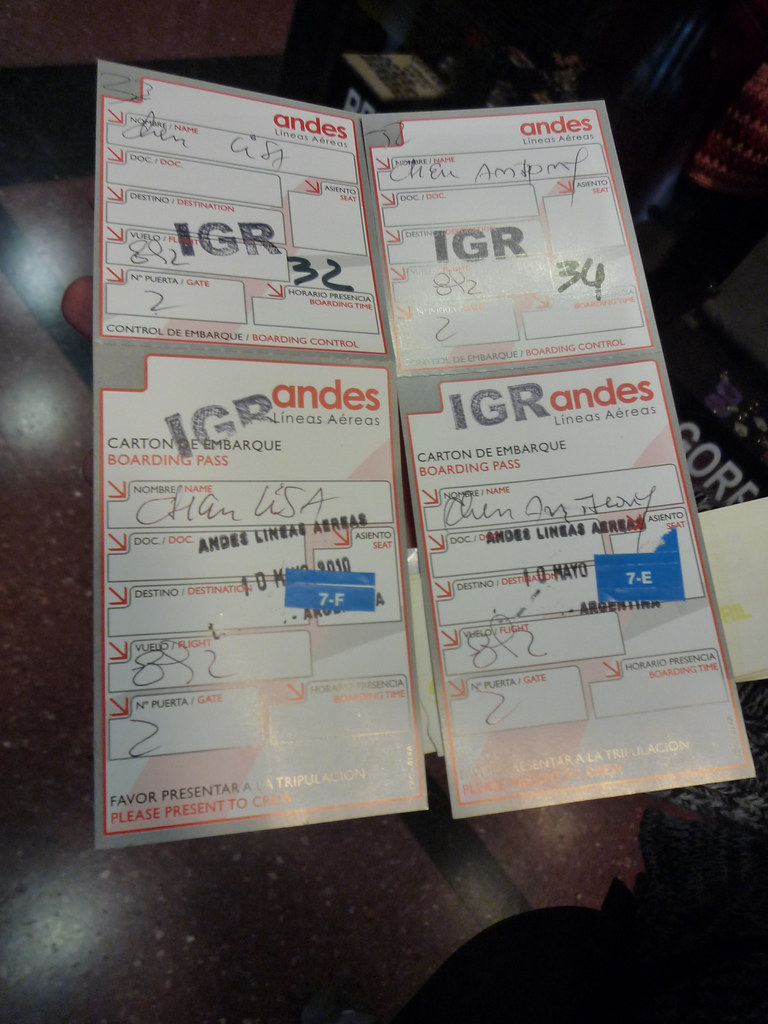
Andes Air is starting to change that.  We were very excited to learn that we could fly on a modern airline, direct from Salta to Iguazu AND pay a lot less.  Check out our handwritten boarding passes!

Iguazu Falls

My first thought when I saw Iguazu Falls was “holy moly that’s alot of water”.   It’s breathtaking and overwhelming to imagine how much water flows over the falls every minute.   Not surprisingly, Iguazu literally means “big water” in Guaraní (the local indigenous language).  The Iguazu Falls divide the same-named river into an upper and lower river.  It’s also a place where three countries meet – Paraguay, Brazil and Argentina.  While Brazil boasts the best panoramic views, Argentina allows you to get up close to the falls.  We opted to stay on the Argentine side (and save the $130+ Visa that Tony would have needed to enter Brazil).

Getting Up Close and Personal:  Garganta del Diablo (Devil’s Throat).

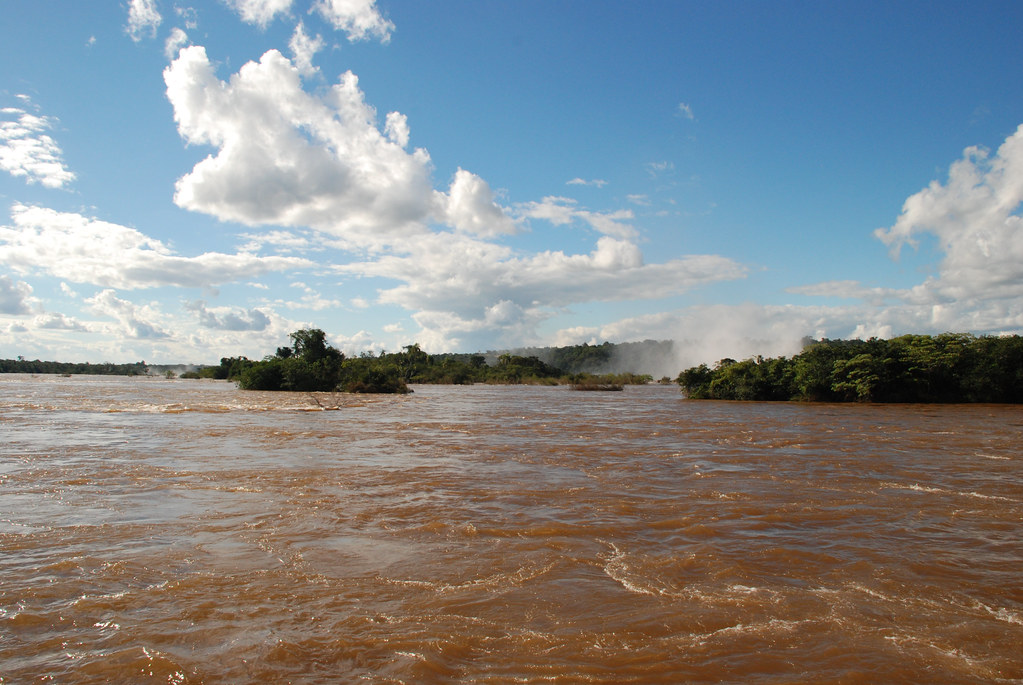
We spent 2 days exploring the national park that houses the Falls.  The first day, we took a series of cat walks …

… over the expansive upper Iguazu river …

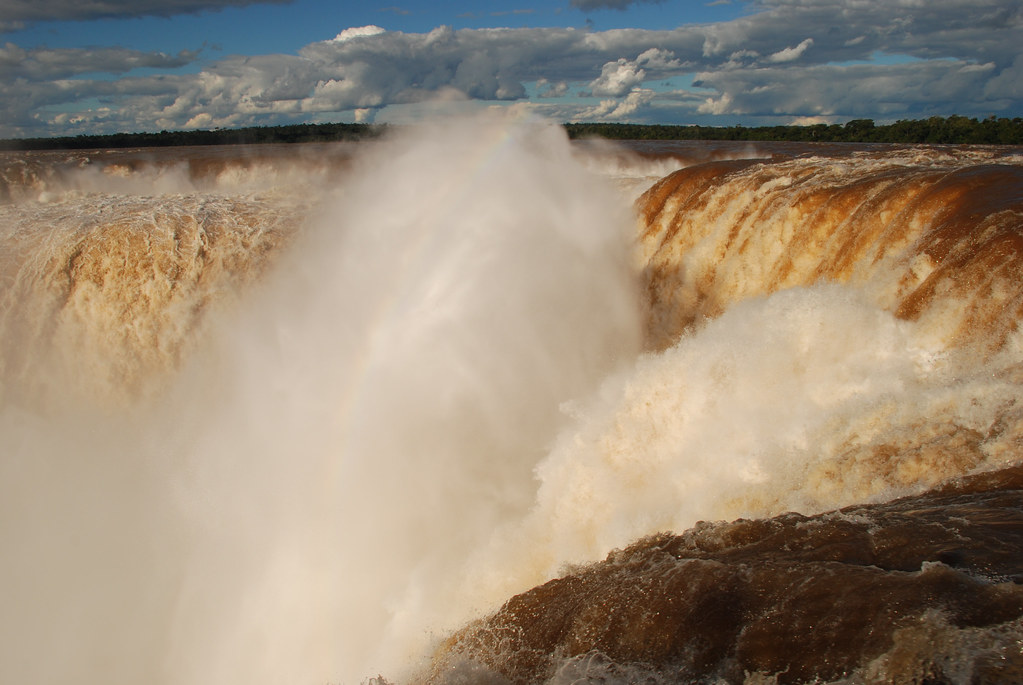
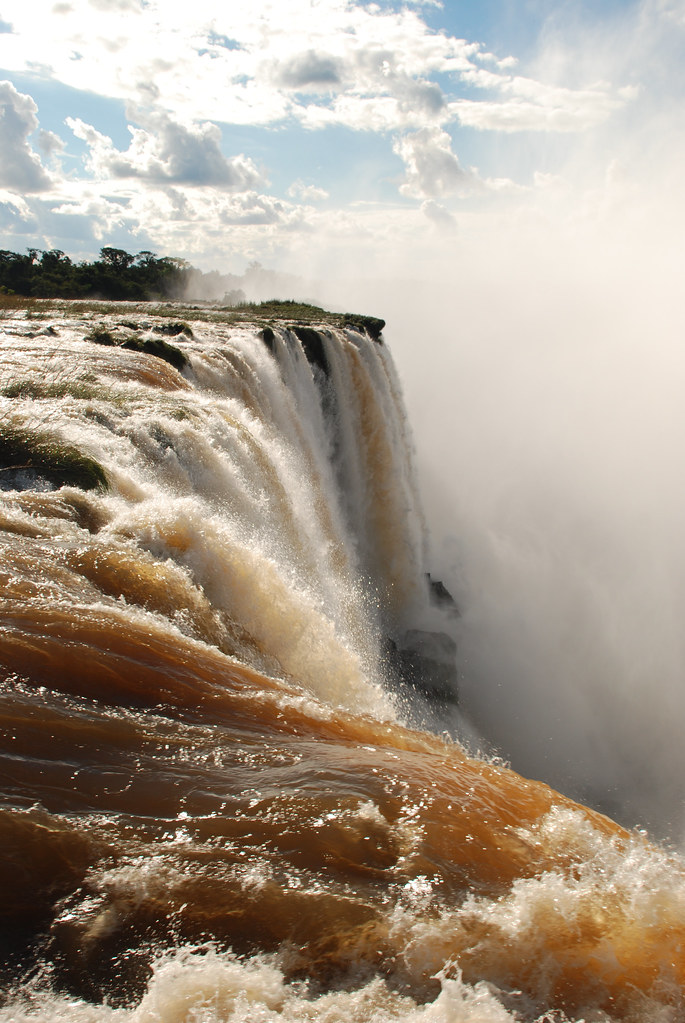
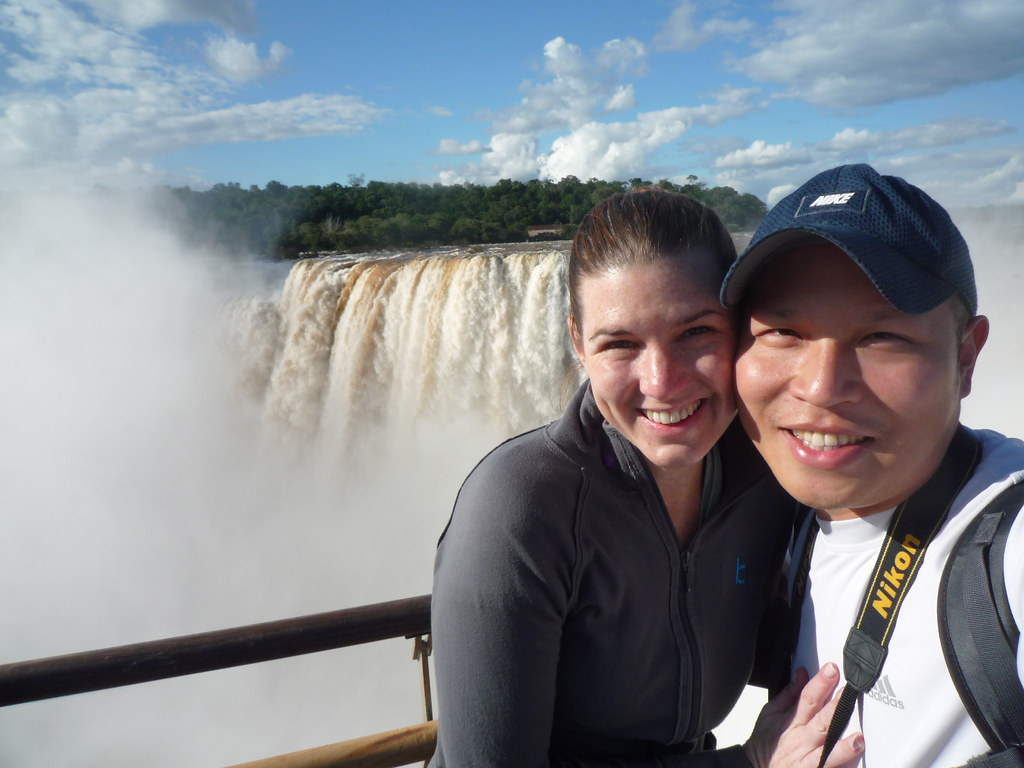
and got up to the very edge of  set of u-shaped falls called “Garganta del Diablo” (Devil’s Throat) which are the largest and most impressive of the series of Iguazu Falls.

Play the video below – it’ll give you a sense of the power of the water going over these falls:

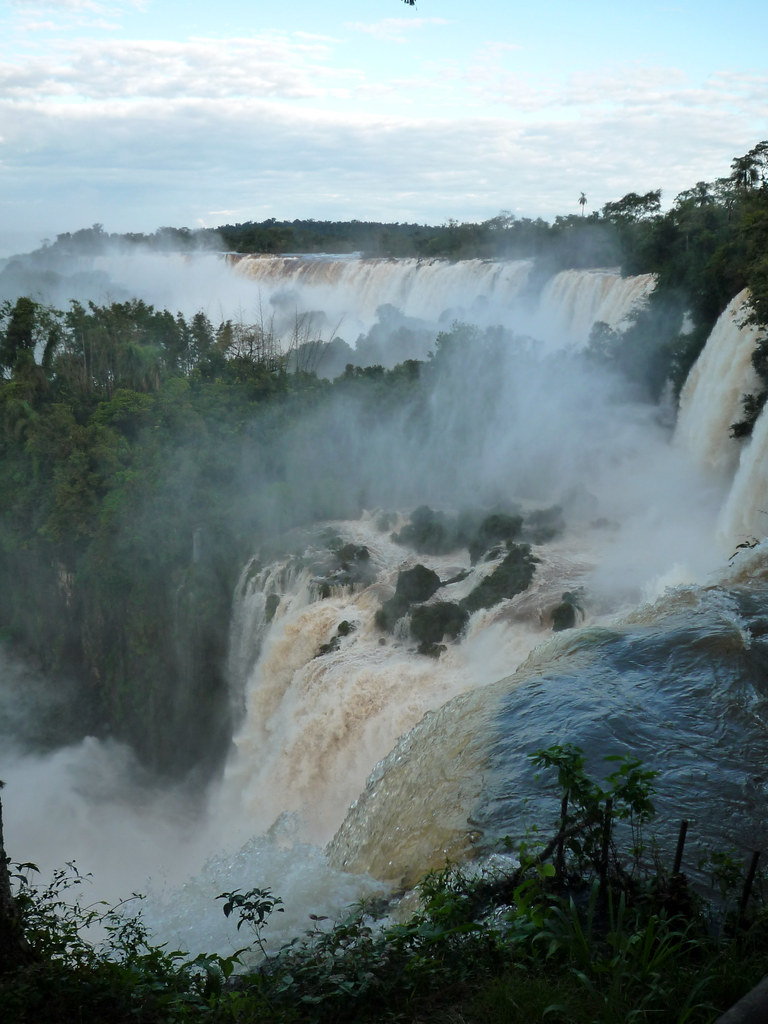
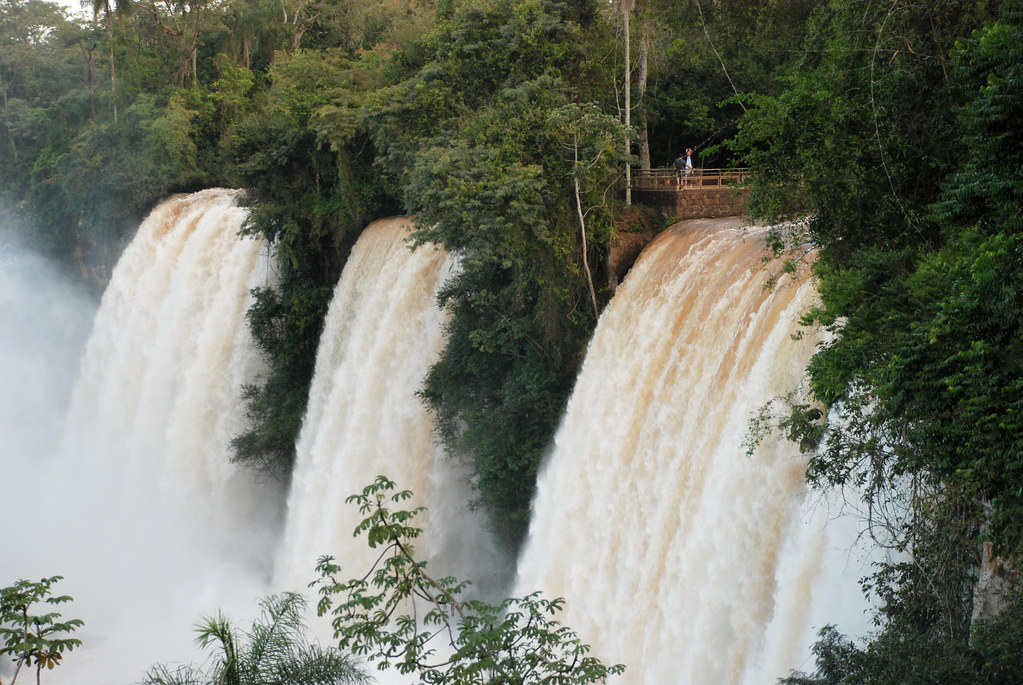
Here are some more photos of the falls:

There are a couple hundred waterfalls at Iguazu so you can get waterfall desensitization, but below are a couple of highlights.

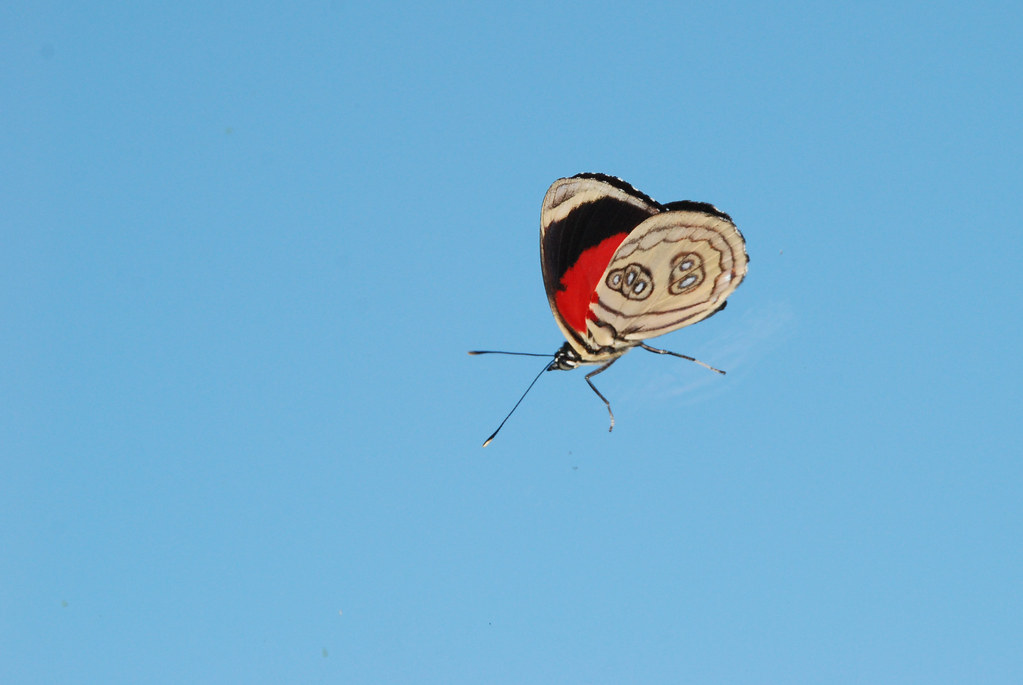
Ok so it’s not a picture of a waterfall, but I thought it was pretty cool… Tony was able to capture a butterfly while it rested on a window.

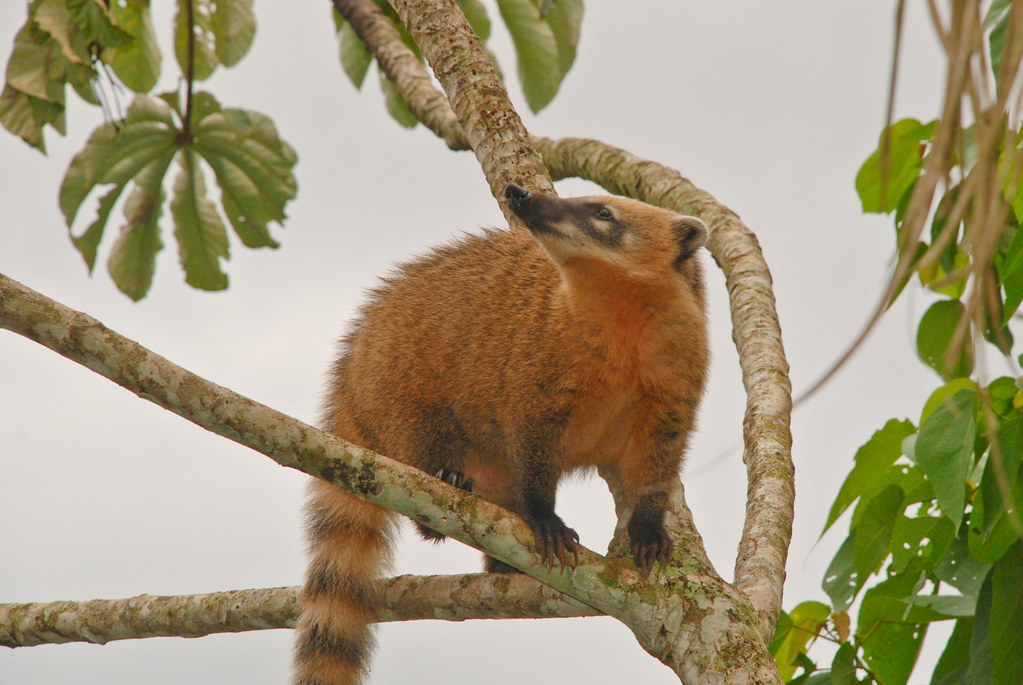
Also, not a waterfall … Tony befriended these raccoon-like animals called coati…  But don’t go pet these creatures, they can be vicious when it comes to food, and they have sharp claws.

Getting up Close and Person:  La Ducha (the Shower)

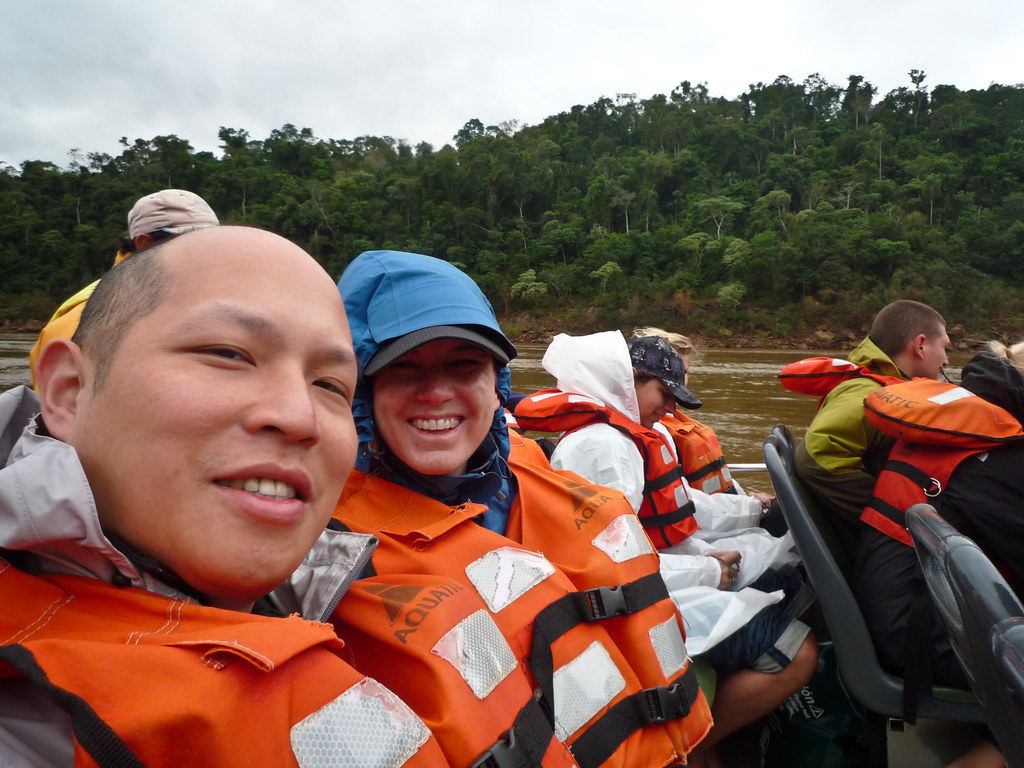
The next day, we revisited Garganta del Diablo, but this time from below… look at me, I’m on a boat!  OK, not the same, but we digress…

Check out the video of us being bombarded by the spray from the water:

Also, here’s a link to the rest of our photos from Iguazu:

Categories
Argentina

Purmamarca and La Quebrada de Humahuaca, Jujuy, Argentina

Cerro de Siete Colores (Seven colored hill), Purmamarca, Argentina

Total Miles Traveled: 13,423

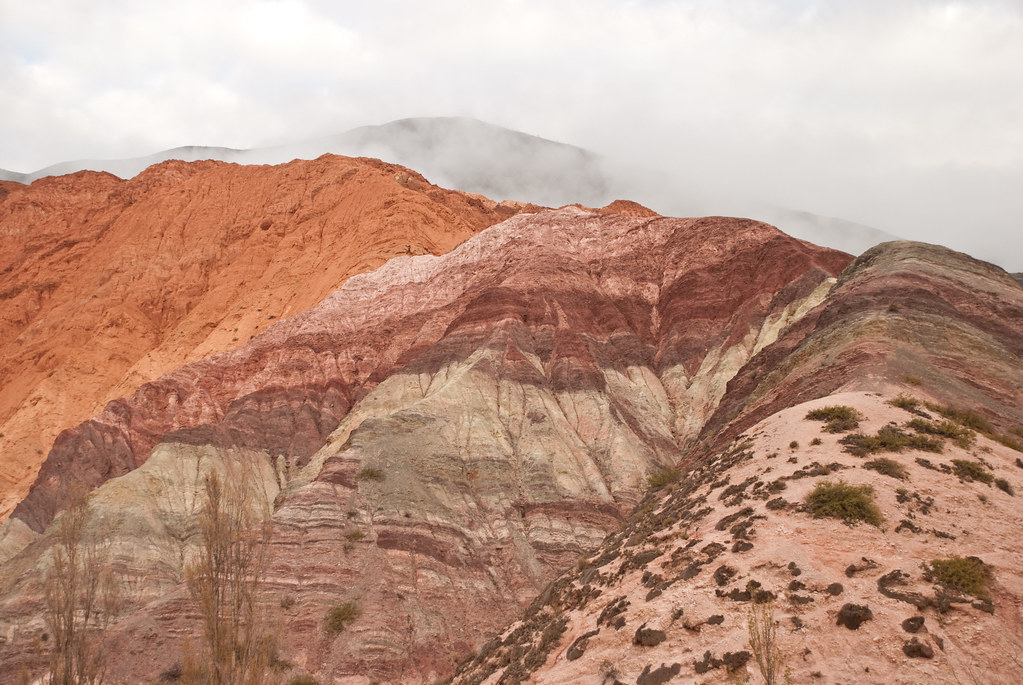
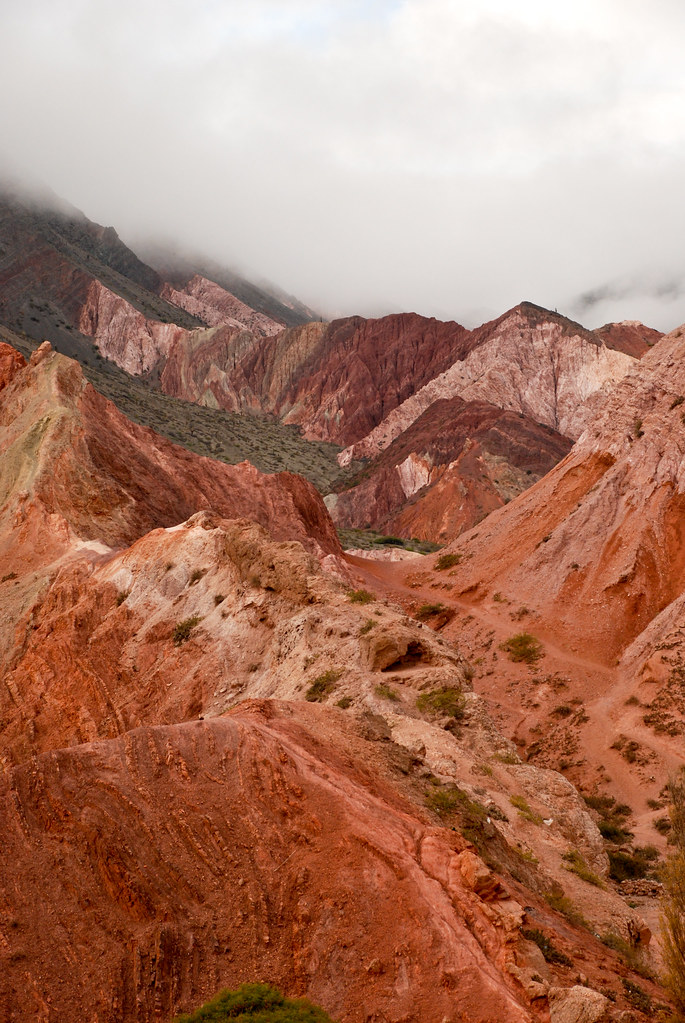
Purmamarca is a tiny town ideally located in front of the Cerro de los Siete Colores (Seven-colored hill) pictured above, which is a UNESCO World Heritage site.  The colors are a result of different metals in the earth in different states of oxidation.  For example, iron oxidizes and turns reddish and copper turns bluish green.

One morning, I took a hike up one of the hills in the center of town and took a look around:

Here’s a view into another valley:

Purmamarca, Argentina

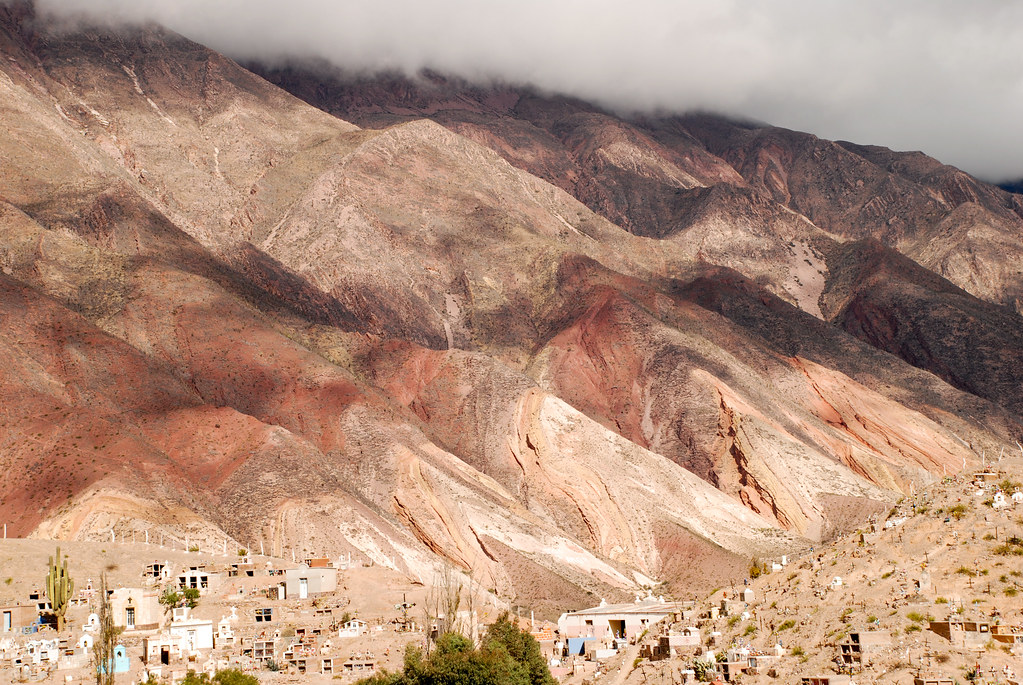
“La Quebrada de Humahuaca” means the Humahuaca valley or gorge.  It begins around Purmamarca and winds north through Humahuaca (about 1.5 hrs away from Salta) and all the way up to the border with Bolivia.   Definitely worth a drive or a bus tour up from Salta or Jujuy.  Here’s a view from the highway at Maimara:

Quebrada de Humahuaca, Jujuy, Argentina

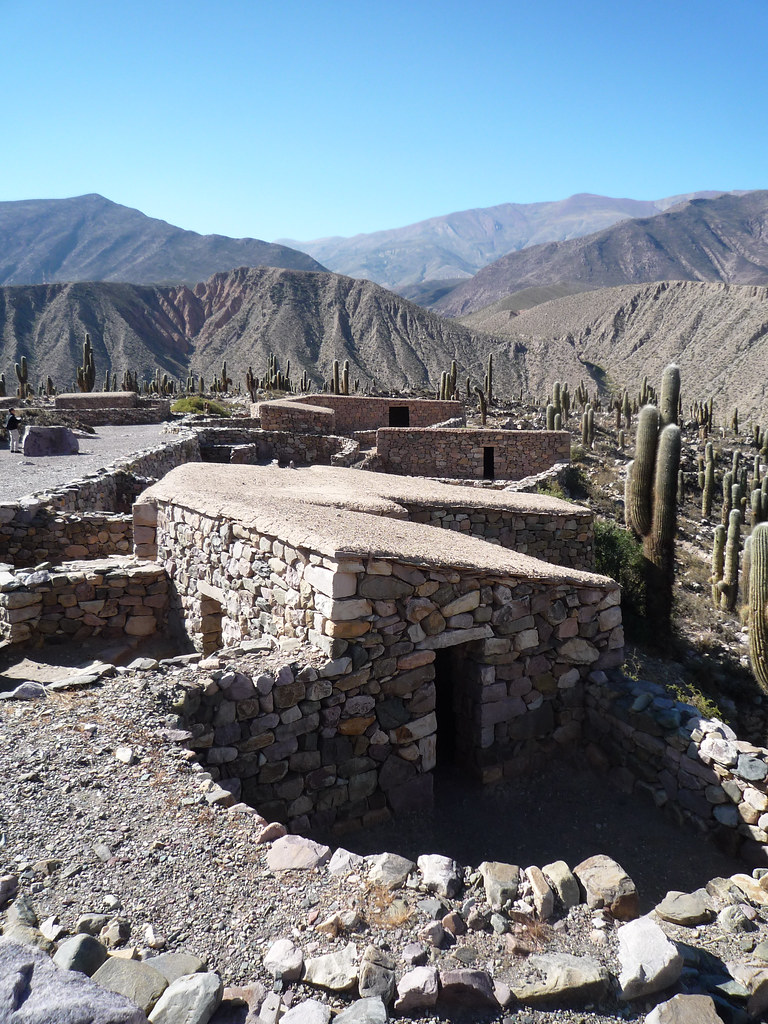
The town of Tilcara lies north of Purmamarca.  It’s definitely a larger, more touristy town, and features reconstructed ruins from indigenous people who lived there around 600 A.D., these people too disappeared mysteriously.

Ruins of Tilcara

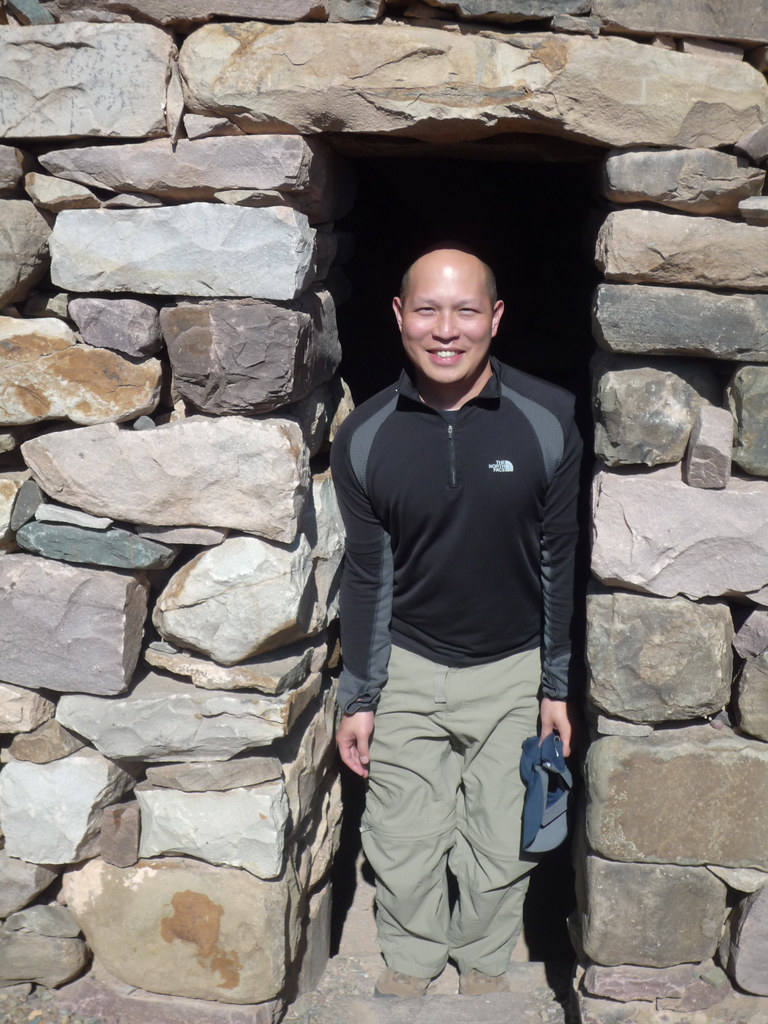
The huts are quite small, or maybe I’m HUGE!  My broad shoulders can barely fit through the doorway.  😉

Ruins of Tilcara

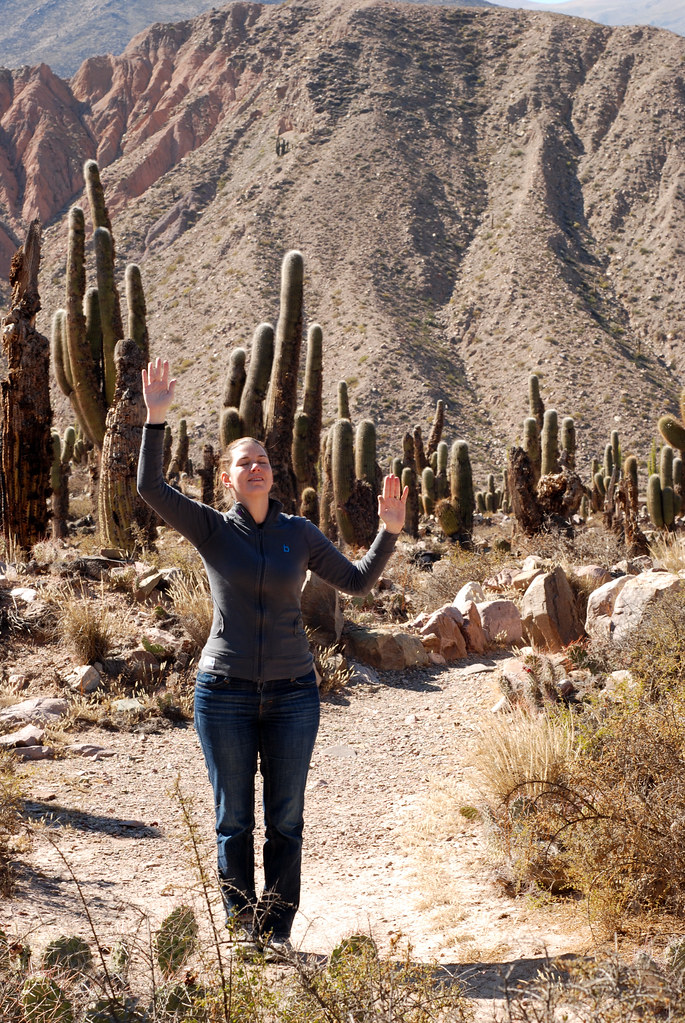
There were also a lot of cacti around – here’s Lisa pretending to be one…  I guess we were a little bored.

It's a Cactus Lisa

More interesting colors and geological formations on the way up to Humahuaca:

Quebrada de Humahuaca, Jujuy, Argentina

Humahuaca

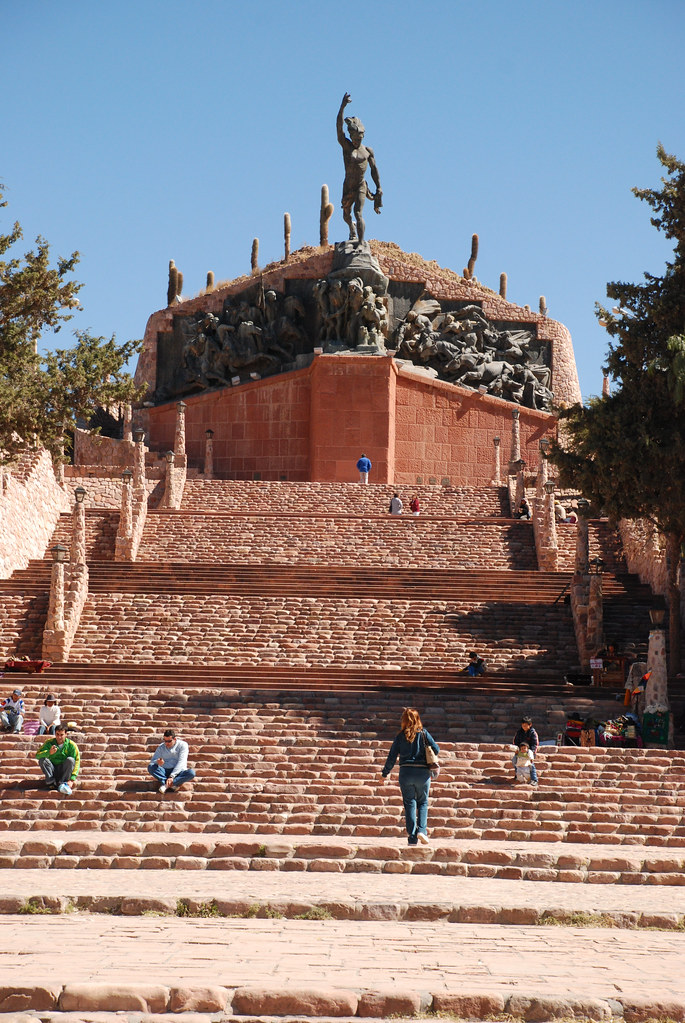
Finally, we reach Humahuaca, which is about 2.5 hrs north of Salta.  The town is even larger than Tilcara and still touristy.  There wasn’t much to see in the town center although there were quaint and quiet cobblestone streets, and a huge staircase leading up to a monument.

Humahuaca, Argentina

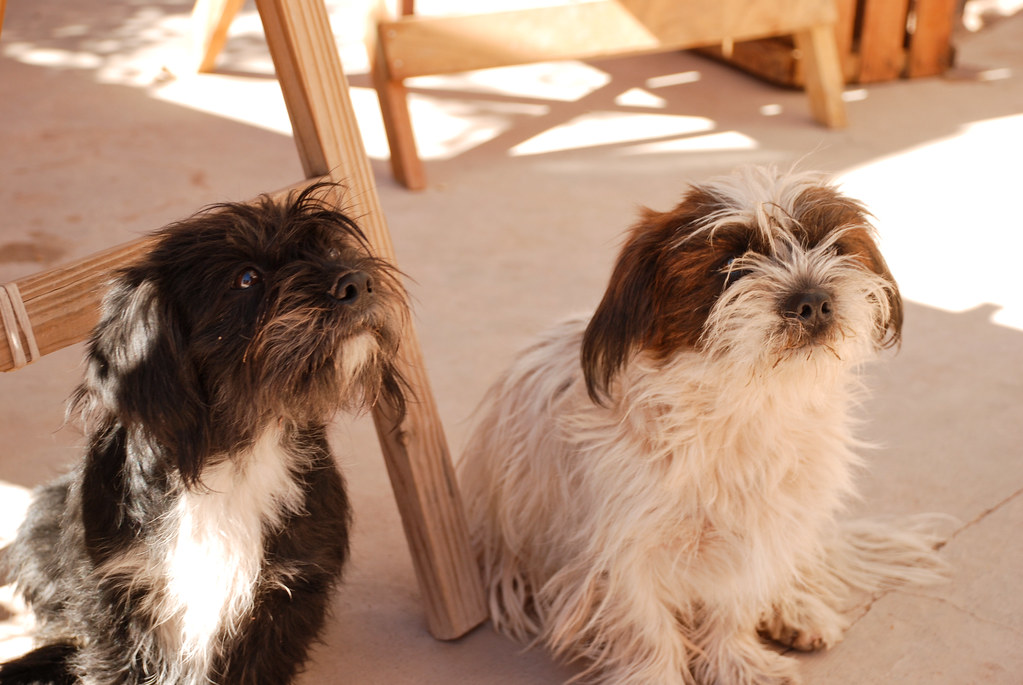
Here are some cute puppies in Humahuaca, distracted by Lisa’s cooing:

Two puppies in Humahuaca

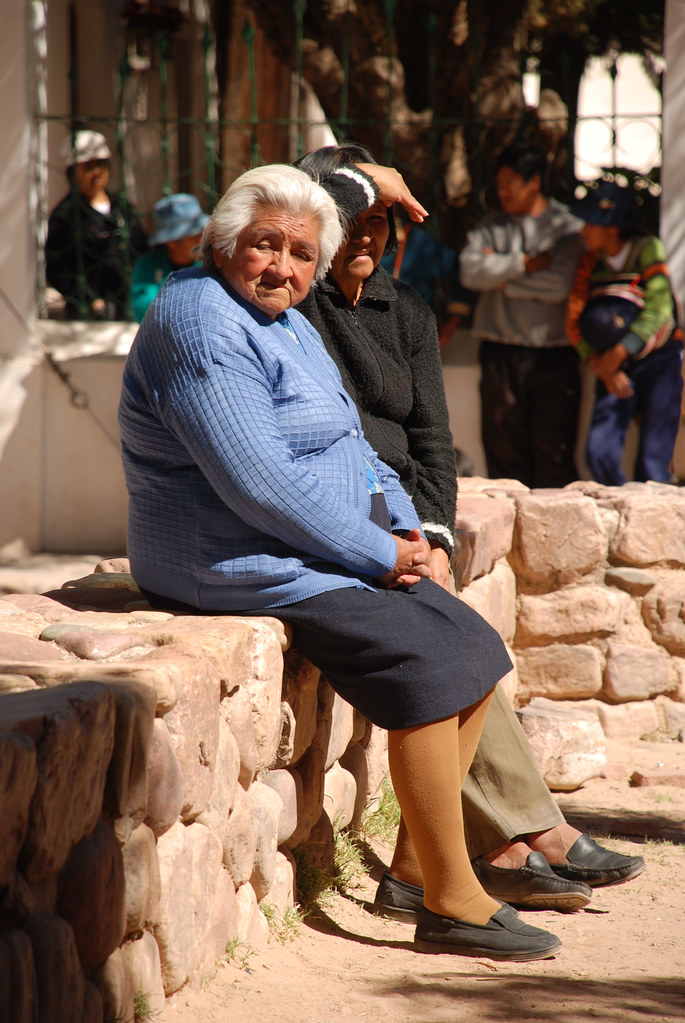
This old lady couldn’t stop staring at us, so I took a photo of her:

Humahuaca, Argentina

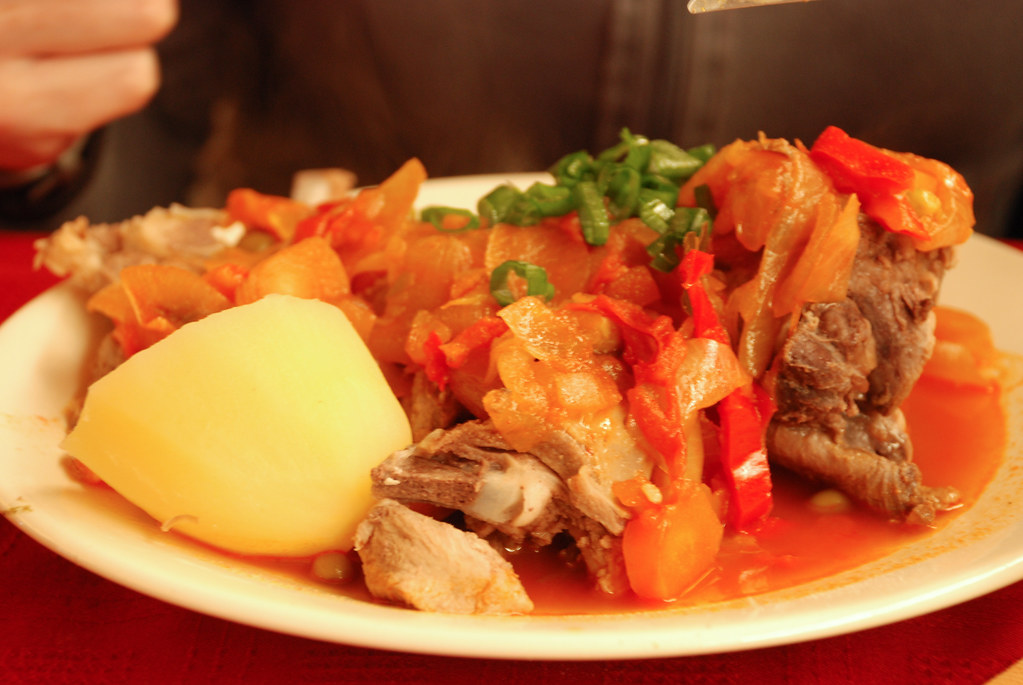
And finally, we had lunch.  Lisa had stewed cordero (lamb):

Cordero (lamb)

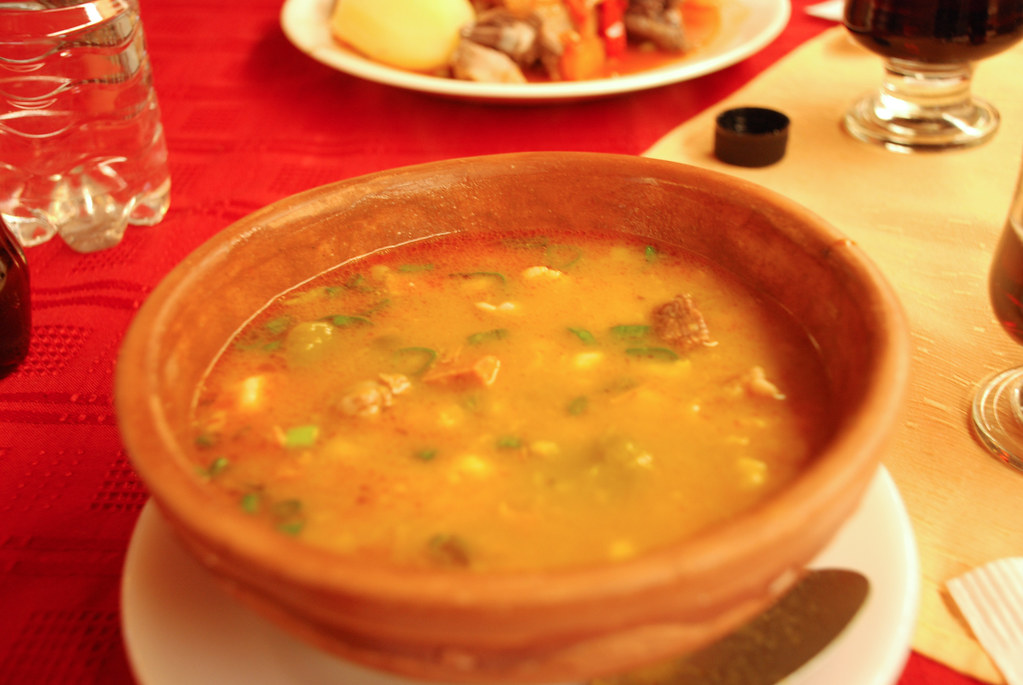
I had the locro, which is a hearty pumpkin stew with beans, corn, lam, green onion, and potatoes – very typical of the region and really good when it’s chilly out.

Locro

Check out more photos on Flickr:

Next, we fly to Iguazu to see the waterfalls!